The Tragic, Enduring Relevance of Arendt’s Work on Statelessness
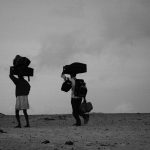
While Hannah Arendt is most known for her reflections on totalitarianism and the banality of evil, eighteen years of statelessness (1933-1951) brought her philosophical questions of how one might be at home in the world into sharp relief. The fact that she was Jewish and German during the first half of the twentieth century profoundly influenced her life and writing. Given today’s refugee crisis, Arendt’s work is being examined anew in order to understand the ways in which mass statelessness has influenced the world since the twentieth century. As historian Jeremy Adelman wrote in The Wilson Quarterly: “Arendt’s voice is one we can turn to as we grapple with the spread of statelessness in our day. Camps and pariahs are still with us.” …
Theses On The Philosophy Of The FKA-Anthropocene, Feat. Shia LaBeouf, Part II
Something of Shia LaBeouf’s name stands in, perfectly, controversially, for what is now happening to us, across us, as a kind of general FKA-transing of all available terms. Around the time Caitlyn Jenner came out, there was talk of an intersectional “trans-”: a trans for race and class and even for ecographic sub-constituencies. During Occupy Wall Street, the same talk happened, and then nothing happened, and a few people said it was still on, and then nothing happened.
Intersectionality seems to be the least sustainable piece …
Theses On The Philosophy Of The FKA-Anthropocene, Feat. Shia LaBeouf, Part I
Walter Benjamin’s strategy in the Theses on the Philosophy of History was to focus on a non-human moment in human time and to present this instance on blast in his prose style. What I mean by “blast” here is the fact that the message had to be pirated past ideological hangers-on and historical barriers, past both Marxist and theotropic renditions, and also past the Nazi episode that might have been his more obvious target in 1940. His prose is clear but depth-charged, resonates at another frequency, still as if exploded past the imaginary proscriptions of Theodor Adorno, who was already in situ in New York …
Benjamin in Jerusalem
The Middle East as crisis and critique
This month, two conferences and one exhibition dedicated to Walter Benjamin’s legacy are descending on Ramallah, Jerusalem, and Tel Aviv. Because of an unhealthy mix of political considerations, security measures, and academic snobbery, I will partake in none of them, despite my deep roots in this troubled land and my recent book on Benjamin. …
The Mastery of Non-Mastery
A report and reflections from Kobane
As I write, the plug is being pulled on the steady-state.
Violence and tragedy take revenge on humanity through routinization. Sooner or later we become immune.
But is there a reverse process, such as Freud writes about in Beyond the Pleasure Principle, where the nightmare recurs so as to provide the anxiety that would have …
Think Outside the Boss
Cooperate alternatives to the sharing economy
Digital labor touches all of us, whether you are browsing Tinder profiles in your spare time, searching for “Jersey Shore” on Google, or ordering an Uber taxi.
In this afternoon’s talk, I will highlight what is and what could be successful about 21st century work and what are some tendencies that are worrisome. Once we gain an understanding of that, we can examine how to work around the concerning dispositions and promote positive trends. In the first five minutes, I will walk you through a few cases that I find troublesome. …