You Say You Don’t Want a Revolution
Conservatism, radicalism, and democracy in 2015
The New York Times’ David Brooks has long been the conservative that liberals hate to love (or at least like). It is easy to see why. Brooks accepts the possibility of reasonable disagreement with the likes of liberals such as Mark Shields or E.J. Dionne, is rarely shrill, and seems to acknowledge the idea that argument and civil discourse are important aspects of a pundit’s professional life on any point of the spectrum. He is, if nothing else, “genteel” …
OOPS versus MOOCs
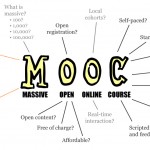
I first thought of writing this post over a year ago as a follow up to my piece “Against the Educational Uncertainty Principle.” I was struck by the way that recent interventions to address the various dimensions of higher educational crisis have made matters worse. MOOCs, Massive Open Online Courses, are a particular case in point. As I wrote then:
“I worry about magical solutions: MOOCs, substituting television for face to face inquiry, even though using the web to strengthen educational practices makes sense to me. …
The Attack on Empathy
I feel for Jeremy Rifkin. In 2010, Rifkin, a public intellectual and best-selling author, published a remarkable book titled The Empathic Civilization. In it, Rifkin argues (1) that humans are soft-wired for empathic feelings toward others and that (2) this potential has to be fostered if we are to survive, as a species, on our precious little planet. The book is a tour-de-force, in which ideas, data from various disciplines and anecdotes are built upon to make a case for empathy. Rifkin is not always very precise, or even correct in reporting scientific findings, but by and large his thesis holds. Empathy is good for you, and for others, and as a society we should do our best to foster it. Yet, Rifkin’s ideas have been the target of a rather intense attack by several eminent scholars, notably psychologists Paul Bloom and Steven Pinker, and philosopher Jesse Prinz. What’s not to agree with in Pinker’s ideas?
Bloom, Pinker and Prinz, echoed by New York Times’ columnist David Brooks, do not think that we should rely on empathy to build a better world. Let’s review some of their ideas.
A good start is Brooks’ article. The article elicited a host of reactions among readers and, not surprisingly, among scholars who formally study empathy. These scholars saw decades of research findings dismissed in an 800-word piece destined to a reading public of hundreds of thousands. Brooks builds his argument “against” empathy from Steven Pinker’s last book (The Better Angels of Our Nature) and a chapter by Jesse Prinz, titled “Is Empathy Necessary for Morality.” The latter is a concise piece, which can be easily read over a 6 oz cup of coffee. Pinker’s is an 800-pages book, which deals with much more than this specific question, and requires a several gallons of coffee, and a great deal of determination, to be conquered.