Flirting with Populist Politics
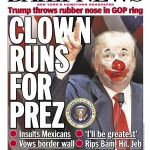
“He reminds me of Hugo Chavéz”, I blurted out to the group discussing Donald Trump and the current state of the US presidential election. Befuddled looks abounded. Much has been written and plenty discussed regarding Trump’s authoritarian streak. Mainstream media is rife with articles, memes, and comments comparing Donald Trump to Adolf Hitler. Two Mexican presidents, Vicente Fox and Felipe Calderon, have already compared Trump to Hitler. Trump’s call to ban all Muslim travel to America is eerily reminiscent of the Nazi regime. The Huffington Post has linked Trump’s style of politics to the historical populist regimes of Adolf Hitler and Silvio Berlusconi, …
Hannah and Me: Understanding Politics in Dark Times
Contrary to the suggestion of my informal title, I did not study with Hannah Arendt, nor were we ever colleagues, although I missed both experiences only by a bit. I was a graduate student in the early 1970s in one of the universities where she last taught, the University of Chicago, and my first and only long term position, at the New School for Social Research, was her primary American academic home.
Ernesto Laclau, 1936-2014
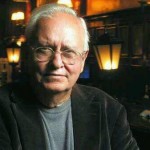
It is with great sadness that we learn of the death of Ernesto Laclau, the outstanding Argentinean political philosopher, at the age of 78. Ernesto had a heart attack in Seville where he was giving a lecture. He was the author of landmark studies of Marxist theory and of populism as a political category and social movement. In highly original essays and books he demonstrated the far reaching implications of the thought of Antonio Gramsci, probed the assumptions of Marxism and illuminated the modern history of Latin America, rejecting simplistic schemas linked to notions of dependency and populism.
After studying in Buenos Aires Ernesto came to Britain in the early 1970s, where he lectured at the University of Essex and later founded the Centre for Theoretical Studies. The Centre ran a very successful postgraduate programme, attracting students from around the world. In the 1970s Ernesto made his mark with his critique of the so-called “dependency school” of Latin American political economists such as Fernando Henrique Cardoso. …