Manufacturing Victory
A review essay on A. J. Blaime's The Arsenal of Democracy
These days people generally think of Detroit — with its vast expanses of abandoned real estate that have given rise to the photographic genre known as ruins porn — as the place where modernity went to die. But for a good chunk of the twentieth century, Detroit was the boomingest of boom towns. In the ten years after the introduction in 1913 of the modern moving assembly line in the automobile industry, Detroit’s population doubled to nearly 1 million. In the 30 years following that, it doubled again to become the nation’s fourth-largest city and one of its most affluent, especially for the working class. An important chapter in that story was the turning of the Motor City’s manufacturing might to arms production during the Second World War when Detroit came to embody the slogan “Arsenal of Democracy.” …
Starbucks Goes to College
I wrote a book about Starbucks a few years ago, so my email started to buzz with Google alerts when the company announced that it would help to provide free education for its employees. The New York Times, the Huffington Post, and Business Week, among others, jumped on the story. A day or so after the announcement, Starbucks CEO, Howard Schultz, appeared on the Daily Show with Jon Stewart, winning mad praise from the host for having “venti balls” to make such a bold move.
As Starbucks officials explained it, the deal offered to reimburse employees for a portion, not all, of their tuition, but only for online classes hosted by Arizona State University’s Web server. Starbucks publicists talked about the company’s “unique” and forward-looking mission to build a people-based corporation that valued individuals and communities as much as profit. …
The Creative Class Rises Again
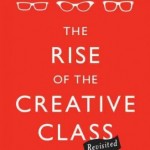
When first published in 2002, The Rise of the Creative Class quickly established its author Richard Florida as an urban policy and business management guru. The Rise of the Creative Class heralded the emergence of a new class of worker who promised to lead the economy, and along with it the rest of society, to unprecedented levels of prosperity. The creative class, according to Florida, included scientists, engineers, artists, designers, media producers, and others whose primary function is “to create new ideas, new technology and/or creative content.” They are abetted in this endeavor by a whole host of high-level information workers—doctors, lawyers, accountants, educators, and the like—who draw upon complex bodies of knowledge to solve difficult problems that require high degrees of autonomy. To mark a decade of influence, the book was re-released in 2012 in a substantially updated version, The Rise of the Creative Class, Revisited, now out in paperback. …