The Capitalism of Affects
In her groundbreaking book about emotional labor, The Managed Heart, Arlie Russell Hochshild suggests that emotions are not simply stored in us waiting to be expressed: they are also produced and managed. The notion and practice of affects management, both privately and socially, are not specific to capitalism. Hellenistic philosophers made up a new word to convey this very idea: metriopatheia, from pathos, affect, and metrios, a word that conveys both the notion of measure and that of moderation. As Foucault correctly noted, the management or negotiation of pathē in Greek and Roman philosophers, and in particular in the Stoics, is constitutive part of a process of subject formation, utilizing what Foucault calls techniques of the self, through which a specific and historically determined subject constitutes himself as capable of self-determination and self-mastery through a process that was social and individual at the same time. …
The Creative Class Rises Again
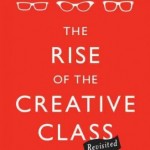
When first published in 2002, The Rise of the Creative Class quickly established its author Richard Florida as an urban policy and business management guru. The Rise of the Creative Class heralded the emergence of a new class of worker who promised to lead the economy, and along with it the rest of society, to unprecedented levels of prosperity. The creative class, according to Florida, included scientists, engineers, artists, designers, media producers, and others whose primary function is “to create new ideas, new technology and/or creative content.” They are abetted in this endeavor by a whole host of high-level information workers—doctors, lawyers, accountants, educators, and the like—who draw upon complex bodies of knowledge to solve difficult problems that require high degrees of autonomy. To mark a decade of influence, the book was re-released in 2012 in a substantially updated version, The Rise of the Creative Class, Revisited, now out in paperback. …