Erotic Pleasure and Technological Mastery

An excerpt from The Comedy of Computation: Or, How I Learned to Stop Worrying and Love Obsolescence

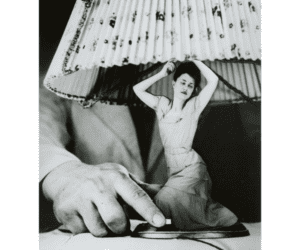
Slavoj Žižek argues that gaming and virtual reality programs figure the computer as “a consistent other, stepping into the structural position of an intersubjective partner.” This claim follows on the heels of a reference to Jacques Lacan’s diagnosis in an infamous koan about the impossibility of sexual relations. For Lacan, ...
Read More
Erotic Pleasure and Technological Mastery

Honest Truths From Wrongful Deaths

In an excerpt from Our Grief Is Not a Cry for War: The Movement to Stop the War on Terror, the author surveys how left-wing intellectuals responded to 9/11

The first war the United States fought following 9/11, I argue, was a “war of interpretation” over the root causes and deep meaning of the attacks themselves. Below is a section from the first chapter of Our Grief Is Not a Cry for War (University of Chicago Press, 2025), in ...
Read More
Honest Truths From Wrongful Deaths

It May Be the Last Time

Lithuanian art and culture resisting a takeover at the height of hybrid warfare

Recent developments in Lithuanian politics have produced a decisive, immediate, and spontaneous resistance from culture workers in various fields. The formation of a new coalition government led to the populist political project Nemuno Aušra (NA)—headed by the antisemitic politician Remigijus Žemaitaitis—being given control of the Ministry of Culture. Žemaitaitis has ...
Read More
It May Be the Last Time

Anti Bodies

Two American Pandemics

------- We now live in a time when the line between being a nobody and a somebody can be drawn by an antibody. Humanity is split. And so is the screen of our double American crisis—one channel nervously tracking a global pandemic, the other crackling with eruptions of civil unrest. But ...
Read More
Anti Bodies

Transgender Psychoanalysis

Lacan, sex, and sinthomes

--- On April 20, 2016, Slovenian philosopher Slavoj Žižek described “transgenderism” as an attempt to undermine sexual difference. In other words, he contended that transpeople are reducing what is, for Lacanian psychoanalysis, an unavoidable sexual impasse to an identity-based human rights discourse (that fits nicely into the neo-liberal capitalist order).[i] He suggested that ...
Read More
Placeholder

Recovering Community: Part II

Remembering the Jungle at Jules Ferry

In its time at Jules Ferry, the Jungle crossed a threshold in the nature of its transgression as a political subject. This transgression was its establishment of community. What the Jungle came to embody in political form was a common project; common, that is, in two senses of the word. ...
Read More
Recovering Community: Part II

‘Resistance’ and Liberal Activism

The problems with using the word ‘Resist’

The word “resist” has become a common term in progressive politics. Protesters and activists of all stripes take to the streets and to social media with this one-word rallying cry on their lips: “resist.” Resist the Trump Administration. Resist its attending ideology. Resist the country’s seemingly imminent “End of Days.” ...
Read More
‘Resistance’ and Liberal Activism

Review of Jodi Dean’s Crowds and Party

On Collectives, Communicative Capitalism, and Suspension of the Individual Ego

Nowhere was this sense more palatable than in Zucotti Park, where the #OccupyWallStreet protesters set up camp. It was a moment when, especially for the Left, the world paused as if the railroad switch of history might suddenly direct the country on a new, more equitable track. Six years later, even ...
Read More
Placeholder

How to Think through Cages

What I liked so much about these suggestions was the subtle call to think without fear and without expectations. The cages will always be there, but I came to understand how important it is to create a philosophical cage that allows you to leave it. When would leaving become necessary? ...
Read More
How to Think through Cages

Against “Charm”

The Uses of Autobiography for Philosophy

Moreover, how other philosophers lived and died is not the most important thing about them either: while life and work are inseparable, the latter takes pride of place. Heidegger went too far in saying that all one needs to know about Aristotle, for philosophical purposes, was that he lived, then ...
Read More
Placeholder