FeatureLettersReviews

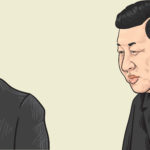
Xu Youyu Takes Stock Of The Chinese Cultural Revolution

In “The Cultural Revolution, Fifty Years Later,” recently published in Foreign Affairs, Professor Xu Youyu, the University in Exile Scholar at The New School, rightly notes that many intellectuals and officials who lived through the Chinese Cultural Revolution are quietly taking stock of the lessons and legacies of that tumultuous event. …

READ MORE →
EssaysFeatureScience

Climate Policies After Paris

Toward the end of 2015, leaders from around the world convened in Paris for the latest round of international climate talks. This marks the 21st annual Conference of Parties of the United Nations Framework Convention on Climate Change. More than 40,000 people from over 150 countries attended the conference, representing governments, businesses, non-governmental organizations, and supranational institutions.

The Paris talks underscore the importance of addressing climate change before Earth’s ecosystems face irrevocable damage. Simply put, the use of carbon-based fuels that have been central to the economic development of the last couple hundred years creates a significant cost for the environment. Increasing dependence on fossil fuels has precipitated an unprecedented shift in a number of climate indicators. …

READ MORE →
Arts & DesignCapitalismEssays

Rebooting RoboCop

Comparing 2014 with 1987

As someone who grew up with Paul Verhoeven’s original 1987 RoboCop, I can’t help but feel the dystopic and critical social commentary of the movie was lost in its reboot. What was once a critical and distopic film exploring the dangers of unchecked corporate power has become a soft endorsement of corporate warfare. Yet, some elements of the remake do provide useful insights into our changing social politics that are worth considering. The evolution of RoboCop reveals how both capitalism and imperialism have changed and deepened their hold on our cultural imaginary in less than pleasant ways.

There are basically four key sets of players in the original story: Omni Consumer Products or OmniCorp (OCP), the mega corporation which builds RoboCop, runs the Detroit police force and plans to construct a corporate utopia called “Delta City” in the ruins of old Detroit; Alex Murphy, the Detroit cop who becomes RoboCop; the police department run by OCP; and crime boss Clarence Boddicker, who is in cahoots with OCP executive Dick Jones,  The connections among these players were central to the original story. …

READ MORE →