Naguib Mahfouz’s Last Dreams of Cairo

In a new translation of the author’s late writing, dreaming is an act of mapping Egyptian identity

The Arabic word barzakh refers to the liminal space between death and the day of judgment. In his introduction to a new collection of Naguib Mahfouz’s late-career writing on dreams, editor and translator Hisham Matar describes Mahfouz ensconced in a barzakh-like state during the final decade of his life. In ...
Read More
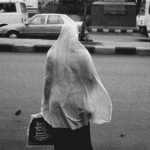
Naguib Mahfouz’s Last Dreams of Cairo

The Dilemma of a Fragmented Self

Mass migrations, language, and the future of identity

How can language create such a convoluted way of experiencing the everyday world? We can explore this phenomenon with two linked concepts: the speech act and the discourse community. ...

Read More
The Dilemma of a Fragmented Self

Meaty Pleasures

“In the whirlwind of hook-ups I saw every afternoon, that stitching together of Thursday after Thursday with love and desire was the essence of continuity.”

The following story, “Thursdays,” is excerpted from Meaty Pleasures, a collection of fiction by award-winning Mexican writer Mónica Lavín, translated by Dorothy Potter Snyder and published by Katakana Editores in September 2021. Meaty Pleasures is available for purchase in print or as an e-book. Thursdays I shouldn’t have done it. But I ...
Read More
Meaty Pleasures

The New Essentialism

Old ways of thinking are returning–again

_____ If we share the assumption that every culture is necessarily incomplete in itself and that there is no such thing as a self-contained, homogeneous culture, then the very definition of a given culture has to include what I would call inter-translatability. In other words, being-in-translation is an essential defining feature ...
Read More
The New Essentialism

Fiction For An Uncertain Era

An Interview with Idra Novey

I met Idra Novey in the nineties, when I was the administrator of the arts and education organization El Taller Latinoamericano in Upper Manhattan, and she was a student at Columbia University. The fiercely brilliant young woman who was our intern has become an acclaimed poet, literary translator, and novelist, whose recent ...
Read More
Placeholder

Why Aren’t More Women’s Texts Translated into English?

A lack of attention from male translators, publishers and critics keeps literary fiction by women barely visible in English.

In a U.S. market where over 70% of all books published in translation are by men, our compromise seemed necessary. It also felt a bit dirty. For women writers and their translators, our individual experiences of bias are supported by statistics. According to the 2017 VIDA Count, our texts compete in a ...
Read More
Placeholder

Crossing Borders Is My Life

Doing and teaching literary translation in the age of customs and border protection

I grew up on the wrong side of the Iron Curtain, in a country afraid its citizens would leave and wary of foreigners somehow contaminating or stealing something from the homeland. As we were preparing to leave Moscow forever (we thought) in 1978, my grandmother's youngest brother, whom she had ...
Read More
Crossing Borders Is My Life

Roland Barthes Reports from the Sanatorium

A new collection examines how institutions infantilize society

Album: Unpublished Correspondence and Texts, recently published by Columbia University Press, provides an unparalleled look into Roland Barthes' life of letters. It presents a selection of correspondence, from his adolescence in the 1930s through the height of his career and up to the last years of his life, covering such topics as ...
Read More
Roland Barthes Reports from the Sanatorium

The Pronoun “O” and the Poetics of Turkish Translation

An excerpt from a new translated volume of Aslı Erdoğan’s short stories

The passage below is an excerpt from Sevinç Türkkan’s new translation of Aslı Erdoğan’s volume of short stories,The Stone Building and Other Places. It is accompanied by an interview with the translator in which she discusses the joys and challenges of translating from Turkish to English. Erdoğan is a well-known ...
Read More
The Pronoun “O” and the Poetics of Turkish Translation

Rapture, by Iliazd: an excerpt

Translated by Thomas J. Kitson

Public Seminar [PS]: How did you find yourself translating Rapture? Are you an admirer of Iliazd’s work? I guess I’m interested to know why you chose Iliazd, and Rapture in particular? Thomas J. Kitson [TJK]: When I was in college, I was attracted to the varieties of zaum (beyonsense) practiced by Russian Futurist poets, especially Velimir Khlebnikov and ...
Read More
Rapture, by Iliazd: an excerpt

Poetry’s Intrinsic Ontology of Change

Plasticity, Translation and the Work of Catherine Malabou

The fragmentation of deconstruction can feel liberating, a rush of loosed energy. But it can also feel untethered, endless; panic inducing. While it allows for each of us and our writing to be multiple, it also prevents us from ever feeling grounded. Plasticity as a driving method in translation allows ...
Read More
Poetry’s Intrinsic Ontology of Change