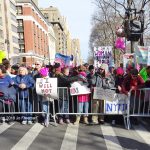
Millions March Throughout Country on Inauguration Anniversary
Hundreds of thousands in New York City
The Women’s March, Russia, and Obama’s Farewell
Past Present: Episode 66
In this week’s episode, Niki, Natalia, and Neil debate the women’s march on Washington, US-Russian relations, and Obama’s final speech to the nation.
Women in the Rulings of the African Commission on Human and People’s Rights
Moving beyond the single story
After a long battle with the mainstream of human rights discourse and institutions dating from at least the era of the League of Nations, feminists organized in a transnational movement [1] have succeeded in placing women’s issues at the centre of human rights debates.
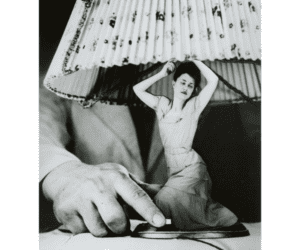
Here I want to take a step back from celebrating these achievements and ask: if women are now part of the transnational discourse on human rights, who are these women? How do transnational human rights institutions represent them? Or, put in other words, who is the female subject of transnational legal discourse and what gendered harms are made visible in this arena? …
Ernesto Laclau, 1936-2014
It is with great sadness that we learn of the death of Ernesto Laclau, the outstanding Argentinean political philosopher, at the age of 78. Ernesto had a heart attack in Seville where he was giving a lecture. He was the author of landmark studies of Marxist theory and of populism as a political category and social movement. In highly original essays and books he demonstrated the far reaching implications of the thought of Antonio Gramsci, probed the assumptions of Marxism and illuminated the modern history of Latin America, rejecting simplistic schemas linked to notions of dependency and populism.
After studying in Buenos Aires Ernesto came to Britain in the early 1970s, where he lectured at the University of Essex and later founded the Centre for Theoretical Studies. The Centre ran a very successful postgraduate programme, attracting students from around the world. In the 1970s Ernesto made his mark with his critique of the so-called “dependency school” of Latin American political economists such as Fernando Henrique Cardoso. …