Sentencing the Present: Part Three

Critical conversations in a time of crisis

A sentence is protean: It can describe, question, or cry out. A sentence is critical: In passing judgment, it names wrongs, makes decisions, and declares publicly. In a spirit of both open inquiry and political advocacy, and inspired by the response of readers to our own “Theses for Theory in a ...
Read More

Sentencing the Present: Part Three

Radical Hope Amid Catastrophe

When a collective culture is threatened with collapse, so are the reference points for defining a good life.

At a Christian Dior factory outside Paris, machines that once filled ornate vials with luxury fragrances are filling plastic bottles with hand sanitizer destined for public hospitals. Men and women who were dossing down on London’s streets have begun sleeping in rooms of the InterContinental Hotels Group after the city’s mayor negotiated a way ...
Read More
Radical Hope Amid Catastrophe

Sentencing the Present: Part Two

Critical conversations in a time of crisis

This seminar is part of an ongoing series. Read part one of "Sentencing the Present" here. A sentence is protean: It can describe, question, or cry out. A sentence is critical: In passing judgment, it names wrongs, makes decisions, and declares publicly. In a spirit of both open inquiry and political ...
Read More
Sentencing the Present: Part Two

The Job of Critical Thinking Now

Protest offers a vision of the future that refuses mere recovery

As with those other fault-lines, the problem is not new, as François Hartog reminds us when he writes of “presentism.” Sometime in the twentieth century, we lost our belief in the redemptive power of history and so in the guarantee of a better future. Wendy Brown puts it succinctly: “We know ...
Read More
The Job of Critical Thinking Now

Sentencing the Present

Critical conversations in a time of crisis

In light of Marx’s 1843 conception of critical thought, how does your perspective contribute to “the self-clarification of the struggles and wishes of the age”? In a time of social breakdown and uncertainty, we find that critique comes almost too easily. Hence we also take inspiration from the historian E. ...
Read More
Sentencing the Present

The Rebirth of Tragedy

We are all existentialists now, knowing only that we must try to carry on

Today we find ourselves in the midst of another great calamity. Once again we are compelled to ask whether our rational faculties are capable of coping with a virus about which we know far too little. The measures we think we need to take to keep untold numbers from dying are themselves so painful ...
Read More
The Rebirth of Tragedy

What Thucydides Can Teach Us

Ancient reflections on a time of plague

Coronavirus will end the Trump presidency – or it will boost his chances of reelection. COVID-19 will provoke a revolution – or it will restore trust in liberal democratic institutions. It will make us more distant – or it will bring us closer together. Thucydides, the ancient Athenian author of the History of the Peloponnesian War, ...
Read More
What Thucydides Can Teach Us

The Dharma of Fashion

If you crave fashion, make friends with your desire

It is said that on the eve of his enlightenment, the Buddha sat beneath a tree and was assailed by the demon Mara. Mara is literally “Death,” the personification of temptation and distraction. Using seductive images and ultimately doubt, Mara challenged the Buddha, distracting him from his goal of enlightenment. ...
Read More
The Dharma of Fashion

Theses for Theory in a Time of Crisis

In a world shifting more quickly than we can consider, analysis is more important than ever

Catastrophe is not “to come,” but here and now. Before the current pandemic, our way of life was already killing life on earth. State selections of who shall live and who shall die already produced medical shortages. “That things are ‘status quo’ is the catastrophe. It is not an ever-present possibility ...
Read More
Theses for Theory in a Time of Crisis

Courage Before the Break

Agnes Heller’s Theory of “Radical Needs” Revisited

“Good persons exist, how are they possible?” With this question, inimitable Hungarian philosopher Agnes Heller outlines her philosophical territory. As readers of critical theory, it is hard to know how to begin expressing our admiration for the energetic grande dame of our tradition. One anecdote might suffice: Heller’s mentor, the great, but ...
Read More
Courage Before the Break

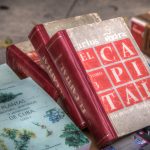
Are Marx’s ‘Capital’ and Althusser’s ‘Reading Capital’ Still Relevant Today?

Princeton professor Nick Nesbitt argues for the transhistorical importance of both works

The following are excerpts from an interview with Nick Nesbitt conducted by the Brazilian newspaper Folha de São Paolo and from his introduction to the edited volume The Concept in Crisis. Reading Capital Today published by Duke University Press in 2017. Copyright 2017 Duke University Press. Folha de São Paolo: A century and a half after ...
Read More
Are Marx’s ‘Capital’ and Althusser’s ‘Reading Capital’ Still Relevant Today?