Bigger Canvas, Longer Necks
An artistic intervention enacting a revolutionary desire
From the Public Seminar mission statement: “Confronting fundamental problems of the human condition and pressing problems of the day, using the broad resources of social research, we seek to provoke critical and informed discussion by any means necessary.” This includes provocative art. –Jeff
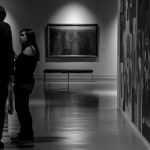
Either we make history or we stupidly stand in front of it like strangers in front of an alien. GRÖSSERE LEINWÄNDE LÄNGERE HÄLSE, BIGGER CANVAS LONGER NECKS, TOILES PLUS GRANDES, COUS PLUS LONGS will take their parts in the estrangement of mankind. But Realism that reverse the conditions, that decomposes and replaces the social automatics by situations, that will not orientate on them, there is the revolutionary desire, that the order of the world should no longer be violence and control. …
A Conversation with Krzysztof Czyzewski
On the evening of April 9th, the Polish theater director, actor, and “practitioner of ideas,” Krzysztof Czyzewski, had a public conversation with Elzbieta Matynia and Jeffrey Goldfarb at the New School for Social Research. Czyzewski discussed his life course from actor in the avant-garde theater Gardzienice to a resident and activist in a remote northeastern corner of Poland, where Poland, Lithuania and Belarus meet, with Russia and Ukraine just down the road. He delves deeply in this “borderland” through living among and working with the people in the city of Sejny and the surrounding area. …
Tiny Instruments Hit a Profound Chord
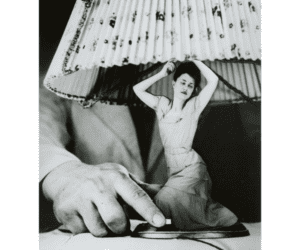
Multicultual creativity in the city of Wrocław
Last summer I was fortunate to be among the faculty of the Democracy & Diversity Institute in Wrocław, Poland, organized by Transregional Center for Democratic Studies (TCDS). Friendships were forged, ideas were tested, and disciplinary lines constructively crossed, all of which I’d been prepared for and had been looking forward to experiencing as the sole faculty member from Parsons among colleagues from the New School for Social Research.
What I hadn’t expected was that I’d develop a deep affection for the music of toy pianos. Specifically the toy pianos played by Małe Instrumenty (Small Instruments), a band started in 2006 by Paweł Romańczuk with Marcin Ożóg, Tomasz Orszulak, Jędrzej Kuziela and Maciej Bączyk.
Yes, toy pianos. Including a plastic Barbie piano, which, Paweł explained, has a very good sound, in contrast to their sole Communist-era piano called Precision whose keys emitted static…
Snyder and Orr Suckerpunch the Arts in Michigan
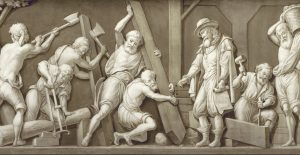
In a nifty move right out of the Reagan Revolution playbook, the governor of Michigan and his hand picked bankruptcy fixer finally revealed their plan for monetizing the art collection at the Detroit Institute of Arts. The plan is brilliant in its simplicity and in its political nuance.
After months of hinting that the art in the museum was “on the table” for a liquidation that would generate cash to offset Detroit’s many debt obligations, the lords of the bankruptcy relented and “saved” the museum. Their idea basically runs like this: Art is worth money (they got an appraisal to prove it). People who like art have money. Thus, why not present the museum with a bill that would equate to the appraised value of its precious art and let the museum tap its rich friends across America for contributions that would pay the tab and keep the paintings on the Institute’s walls.
How perfect! How painless! How noble! This is the ideal “public/private partnership” we are always hearing about! …
Jan Sawka: The Power of the Not So Powerless
The following lecture was prepared for delivery at the symposium “Jan Sawka: The Artist’s Role in Changing the World” presented by The Paul Robeson Galleries, Gallery Aferro and the Newark Arts Council, Saturday, November 16, 2013, in conjunction with the exhibition at the Gallery Aferro, “Reflections on Everyman: the work of Jan Sawka.”
I have crossed paths with Jan Sawka three times, although only one of these times did we meet.
It was at a low moment in Polish history, the early 80s. It was in his small apartment on 58th street in Manhattan, in very cramped living quarters, with Sawka, constantly working, drawing and painting, even while the family entertained guests. In the midst of the domestic, he created his own world, responding to life’s public and private absurdities, and tragedies, with his imagination and craft. The intensity of the moment, during the weeks after the declaration of martial law in Poland, the repression of the first nationwide popular social movement in the former Soviet bloc, a labor movement of workers moving against the workers’ state, …
“All My Life I Have Been a Woman” and Other Excerpts
About language, our society, madness…
Leslie Kaplan read the following excerpts from her plays after she gave the eighth William Phillips lecture on November 6, 2013 at Theresa Lang Student and Community Center/Arnhold Hall of The New School.
all my life I’ve been a woman
a woman
all my life
does that sentence seem
odd to me
Aesthetic Community in Detroit
In the Huffington Post, author and community organizer Yusef Bunchy Shakur and co-author Jenny Lee write: “Detroit is modeling life after capitalism.” One of the ways this is happening is through the work of artists who are helping to envision what that life might look like. These artists are constructing what the French philosopher Jacques Ranciere calls an “aesthetic community.”
The aesthetic community of Detroit is more than simply a collection of artists and other creative types working in the same location. It’s a community of sense, as Ranciere expresses it, which operates on three levels.
The first level of aesthetic community is a certain combination of sense data — materials, forms, spaces, etc. — that constitute the work. In particular in Detroit, this often consists of using recycled castoff materials…
Writing on the Wall: Letters from New York to Berlin
Street art, urban art, urban interventionism
One day I decide to walk down from Penn Station, where I get off the train, to my office at Union Square, determined to soak in all the text that I can see on the streets. The distance I need to cover is about twenty blocks, and I quickly realize that I will not be able to keep up the standard New York walking pace if I am serious about doing this; there is just way too much text to take notice of. First, I have to cut through Koreatown on 32nd street, a particularly dense section of the city that is bewildering when it comes to the pervasiveness of written signs. I start to heavily filter out the onslaught of textual information, as the majority of the signs are printed in a Korean calligraphy that I find aesthetically intriguing but impossible to understand. I focus instead on the many bilingual signs that give away the mishmash of activities taking place in the area…