Israel’s Culture of Violence
In contrast to the old image of the Jew who was led to his death in Europe without fighting back, the Israeli military has played a vital role in creating a new model, in which the Jewish soldier is a strong man who fights and kills for survival. From a practical point of view, the Army was important for the Zionist project for settling the land of Palestine because it was through the force, protection, and support of the military that the settlers were and are still able to settle Palestinian land.
For the Army to function properly — especially in the case of Israel, where military service is compulsory, meaning the Army is made up of the majority of the Israeli citizenship — there is a need to rally as much support as possible behind them. This is accomplished through state rhetoric that provides reasons for the necessity of partaking in a military offensive. …
Gaza: How Will It End?
As I am working on my dissertation, I try to isolate myself from the present and dig into the past, in the hope that something will be revealed. However, I can’t help but to be dragged back to the reality on the ground, because the topic of the past is relevant to the reading of the present.
Throughout this new round of atrocities and violence that is spreading throughout Palestine and Israel, one thing keeps ringing in my ears. According to the Israeli media, there was no choice but to hit the Gaza Strip with all the might of the Israeli Army because the violence that took the form of rocket fire came from the Gaza Strip. And to my amazement, the “civilized” world has reiterated that the State of Israel, as a sovereign and free country, has a right — even an obligation — to strike back against belligerence and protect its civilian population.
The question that must be asked is: who determines the operating chronological framework? …
When Neo-Fascism Was Power in Argentina
An anniversary few want to remember
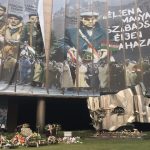
After forty years, though more historical research is needed on the presidency of Isabel Perón (1974-1976), what we know today leads us to consider that her Peronist government was one of the most violent in the violent history of Argentina. To be sure, political violence was quite extensive prior to the death of her husband, President General Juan Perón. Violence was unleashed before and after 1974 …
Adding Injustice to Injury
One year on from the Gezi Park protests in Turkey
Our colleague, Zeyno Ustun, is back in Istanbul this month. We corresponded about the situation there on the occasion of the anniversary of the Gezi protests. She reports political paralysis with maximum police presence and sent a report from Amnesty International that she judges to summarize the situation accurately. Zeyno came across the following piece in Revolution News. It is re-posted here with permission. –Jeff Goldfarb
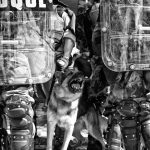
The repression of peaceful protest and the use of abusive force by police continues unabated one year after the Gezi Park protests.
Across Turkey, more than 5,500 people have been prosecuted in connection with the Gezi Park protests. …
Interview with an Expert on Violence
Elzbieta Matynia introduces a very special poem
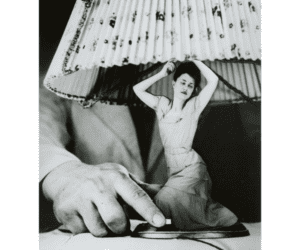
In late September the Transregional Center for Democratic Studies, which I direct, arranged a talk by Anabel Hernández, a Mexican journalist and courageous writer whose book, Narcoland: The Mexican Drug Lords And Their Godfathers,has just been published in English by Verso. I had heard about Hernandez and her work, but I thought a better person to moderate the evening would be our doctoral student in sociology, Gema Santamaría, who works on problems of violence in Mexico. I had gotten to know Gema quite well during our Democracy & Diversity Institute in Wroclaw, where I taught a seminar called Romancing Violence. I knew that though born in Nicaragua she wanted to work on Mexico, where she grew up. I could see that she is a brilliant student and I learned that she is also an accomplished poet. So I thought that she and Anabel – who had not been at the New School before — would make a good team. We had a full house that night, and though some people had to stand on the sides of the Hirshon Suite, nobody moved. Anabel gave an engaging though disturbing presentation, analyzing the tight linkages between Mexico’s political class and its drug economy…