EssaysLiberal Democracy in Question

Democracy or Immaturity?

Interpretations of the Greek referendum in the Euro Zone

The referendum that Alexis Tsipras announced in the early hours of June 27, just days before the expiration of Greece’s rescue program, was from the very beginning a dangerous gamble with little chance of success. His main objective was to strengthen his position as far as his internal rivals are concerned — mainly the hardliners within Syriza who opposed a solution that would entail austerity measures — and his government’s negotiation tactics abroad. The referendum, announced hastily and featuring a fuzzily-worded question on the approval or dismissal of a text that was no longer under negotiation, divided the Greek people deeply and became the subject of heated debates. The clamorous 61% in favor of a “No” vote more accurately reflects people’s accumulated frustration over the ongoing hardship of five consecutive years, rather than an outright rejection of the common currency, as interpreted by the vast majority of the European leadership. …

READ MORE →
EssaysTheory & Practice

From Mythos to Logos and Back?

Machiavelli, philosophy, and fortune

At the opening of the Night of Philosophy in New York City on April 24, 2015, while Monique Canto-Sperber delivered a much-contested opening talk on freedom of speech, Chiara Bottici gave the following alternative opening talk addressing issues of philosophy, writing, and exclusion.

Giving an opening talk on Machiavelli at the “Night of Philosophy” is a double provocation. First, because few authors have generated as much turmoil in the history of philosophy as has Machiavelli. Excommunicated as the incarnation of the devil by some, celebrated as a saint by others, condemned for his “Machiavellism” or celebrated for his republicanism, the meaning of Machiavelli’s works seems to be destined to escape us. …

READ MORE →
CapitalismLiberal Democracy in QuestionMulti MediaVideo

Andreas Kalyvas on the Critical Situation in Greece and Europe

A conversation with Jeffrey Goldfarb

Andreas Kalyvas and I sat down the other day to discuss the situation of Greece and Europe. He and I have been talking about politics for years, in Wroclaw, in Johannesburg, in New York. We understand each other as we differ. He is a leftist, committed to radical transformation. I feel a need to understand how transformations can be realized, and when it comes to revolutions, it’s the self- limiting kind that I saw up close in Poland that I think is most desirable. He is a political dreamer with the eye on the utopian (this is not a criticism), while my dreams are more rooted in experience. …

READ MORE →
EssaysLiberal Democracy in Question

Fortress Europe and a Mediterranean Cemetery for Migrants

In the night between April 18th and April 19th a boat filled with up to 950 migrants sank in the Mediterranean Sea, 70 miles north of Libya, while trying to reach the southern European border. This was not only the greatest tragedy to date involving migrants in the Mediterranean Sea, it is also the last of a long series of deaths: around 14,600 from 1993 to November, 2012; 900 in little more than a year from January, 2014 to April, 2015, before this latest tragedy.

In face of between 700 and 900 deaths, it is difficult to write a series of numbers and data, when anger, sadness, and shame would seem to be a more appropriate response. …

READ MORE →
EssaysLiberal Democracy in QuestionMedia/Publics

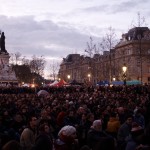
We Say No to the “Sacred Union”

In the aftermath of the killings at Charlie Hebdo and Hyper Cacher, critical voices have largely been drowned in the general sea of undifferentiated outrage. But this statement by French colleagues, which recently appeared in Le Monde, is a major intervention and a welcome exception.

READ MORE →
CapitalismEssaysLiberal Democracy in Question

A Tribute to Economist Bernard Maris (Sept. 23, 1946 – Jan. 7, 2015)

I was shocked to learn that Bernard Maris had been murdered at a meeting of the editors of Charlie Hebdo in Paris on January 7, 2015. He died at his desk, killed by the fanaticism that he regularly denounced.

Bernard Maris was an economist and a member of the governing board of the Bank of France, professor at the Institute of European studies of the University of Paris-VIII, a former University of Iowa professor, and journalist for the publication Charlie Hebdo, where he wrote a weekly column, under the pseudonym of “Uncle Bernard” — a column in which he explained the mysteries of finance. In a profile of victims published Wednesday evening, the Los Angeles Times reported Bernard Maris was a “noted Keynesian…

READ MORE →
EssaysLiberal Democracy in Question

An Uncanny Era of Post-revolution (1989-2014)

Today’s post comes to us via the Transregional Center for Democratic Studies blog. -J.G.

On November 10, 2014, TCDS, partnering with the Polish Cultural Institute, hosted An Uncanny Era of Post-revolution (1989-2014) at The New School. Second in the series of events marking the 25th anniversary of the dismantling of Communist rule in Central and Eastern Europe, An Uncanny Era was the launch of two books and a three-way discussion between Elzbieta Matynia, Professor of Sociology and Liberal Studies at NSSR, who presented her new book An Uncanny Era: Conversations between Vaclav Havel and Adam Michnik; Irena Grudzinska-Gross of Princeton University, editor of a recent collection of Michnik’s essays on the era, The Trouble with History; and Adam Michnik…

READ MORE →
EssaysImaginal PoliticsLiberal Democracy in Question

Fascism on Trial: Greece and Beyond

Last week, Greeks woke up with a shocking phone video that was posted on the newspaper Kathimerini’s website and then went immediately viral on the Internet. A toddler dressed in a traditional Greek uniform, bearing a Nazi armlet on his right arm, and holding a Nazi flag, was being taught by an adult how to perform the Nazi salute and say Heil Hitler. …

READ MORE →