Theses On The Philosophy Of The FKA-Anthropocene, Feat. Shia LaBeouf, Part I
Walter Benjamin’s strategy in the Theses on the Philosophy of History was to focus on a non-human moment in human time and to present this instance on blast in his prose style. What I mean by “blast” here is the fact that the message had to be pirated past ideological hangers-on and historical barriers, past both Marxist and theotropic renditions, and also past the Nazi episode that might have been his more obvious target in 1940. His prose is clear but depth-charged, resonates at another frequency, still as if exploded past the imaginary proscriptions of Theodor Adorno, who was already in situ in New York …
Ghostwork: Endgames in Art & Politics
Along the Limmat River in Zürich, the Swissmill building is in operation at full clip around the clock. Originally a textile factory, the site at Sihlquai was converted to a grain mill in 1843. By 1876 it was considered the most modern milling facility on the European continent with its use of chilled cast iron rollers for cracking open wheat grain and separating the outer layer of bran. Now a patchwork of buildings that harken back to different eras of growth and expansion, the Stadtmühle (or City Mill) exterior conceals a complex, digitally controlled high-tech organism that vibrates with the mechanical rhythms of modern production. …
Radicalization and Human Security in Post-2003 Governance of Iraq
The battle against ISIS in Iraq is critical at both a regional and a global level. But ISIS is not the root cause of the ongoing chaos in the country, which dates back to before the emergence of the terrorist entity or the 2003 US invasion of Iraq. Any form of viable governance is contingent upon the creation and strengthening of social ties within and across communities. The discriminatory and sectarian policies of former Iraqi Prime Minister Nouri al-Maliki have certainly hindered efforts to forge ties among the populace in Iraq. Yet, under both US presidents Obama and Bush, most critiques of the military …
Global Sweatshops, Solidarity and the Bangladesh Breakthrough
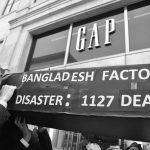
The global apparel industry is a notorious sweatshop employer, with millions of workers laboring under terrible conditions in dozens of developing countries, making products sold in the Global North. This is an industry that was among the first to undergo the globalization of production. The vast majority of workers are young women. Thus this industry combines issues of international trade, race, gender and labor in a confluence of misery and oppression.
The reasons for sweatshop working …
On Pope Francis, Climate Change, and Global Capitalism
A psychological perspective
Pope Francis’s recent encyclical, Laudato si’: On Care for our Common Home, has drawn worldwide attention to climate change and its relationship to global capitalism in advance of the United Nations Conference on Climate Change to be held in Paris in late November …
Jeremy Corbyn’s Attempt to Reinvent British Labour
The changing face of the British Left
On September 12, 2015, Britain’s Labour Party elected as its leader Jeremy Corbyn, a man branded a dangerous socialist and pacifist. He won with 250,000 votes of party members and supporters, out …
Slaves: The Capital that Made Capitalism
A re-post
This post, adapted from a lecture in the team-taught course “Rethinking Capitalism” at The New School for Social Research and first published last year, is being reposted today to provide critical insight into today’s headlines. Slavery was central to the development of the American political economy. Ott reviews the recent scholarship that shows how it came to be that Black lives haven’t mattered. -J.G.
Racialized chattel slaves were the …
Minding the Gap of “The Great Divide”
A review of the book by Joseph Stiglitz
In the wake of Occupy Wall Street and the anti-austerity protests in Spain, Greece, and elsewhere around the world, economic inequality has emerged as one of the more hotly debated issues in the public sphere. One of the more prominent voices in the discussion is economist Joseph Stiglitz, whose May 2011 Vanity Fair article “Of the 1%, by the 1%, for the 1%” …