Phony War Again?

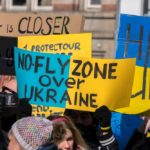
How should we respond to Ukraine’s President Zelenskyy’s repeated demands to institute a no-flight zone over Ukraine?

The question now put before us is simple but fraught: How should we respond to Ukraine’s President Zelenskyy’s repeated demands to institute a no-flight zone over Ukraine? I think there are good reasons why we should heed his request. ...

Read More
Phony War Again?

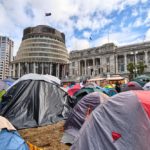
The Riot on New Zealand’s Front Lawn

Reckoning with an antivax occupation, homegrown racism, and global white nationalism

Ardern’s words might have comforted those New Zealanders taken aback by the protest, but it fails to seriously engage with the complexity of the occupation, which intermingled transnational far-right tactics with homegrown white supremacy, wellness misinformation, and indigenous disenfranchisement. The protest, and Ardern’s response, has wide implications for parsing both ...
Read More
The Riot on New Zealand’s Front Lawn

What Are We Defending When We Defend Democracy?

The unruly role of modern social movements in testing the limits of political freedom

I realized, as I wrote to Bill, “that it's quite unclear precisely what form of the American regime we are all ostensibly defending, at this juncture in history. Is it the current form as you describe it, which is so peculiarly open to popular pressure from the bottom up? What if ...
Read More
What Are We Defending When We Defend Democracy?

Movements and Parties or Movement Parties?

Our contemporary conundrum

But how deeply have these recent developments disrupted the forms of the two main political parties? Are we still dealing—as the title of my book implies—with “movements and parties?” Or with movement-parties, hybrids that have added the passions of movements to the parties, while depriving the parties of one of ...
Read More
Movements and Parties or Movement Parties?

Why We Should Rethink the Distinction Between “Institutional” and “Contentious” Politics

Movements and parties do not begin as separate kinds

It was not so long ago, perhaps a few decades, that inquiry into movements and political parties lived within separate disciplines. Aspiring political scientists who were interested in movements might have found themselves forced to make careers in sociology. Until recently, political sociologists were focused on protests and revolutions, paying ...
Read More
Why We Should Rethink the Distinction Between “Institutional” and “Contentious” Politics

How Movements on the Right and Left Differ—and Why That Difference Matters

Defiant oppositional disorder threatens Republicans and the future of democracy in America

I believe that one can’t understand American politics today, and one certainly can’t properly understand the rise of Donald Trump, without keeping this aspiration/opposition distinction at the center of our analysis. Because just as the movements of Left and Right are different in this key respect, these differences inform and ...
Read More
How Movements on the Right and Left Differ—and Why That Difference Matters

Putin’s New Iron Curtain

Freedom and democracy are both impossible if we do not take responsibility for the other

Let us recognize that freedom and democracy are both impossible if we do not take responsibility for the other. This is the call of ethics. It is required to imagine another future, to free the world from arrogant barbarism, to break out of the world in which we now find ...
Read More
Putin’s New Iron Curtain

Race and Redistricting

Gerrymandering is old, but the prohibition of racial gerrymandering is a legacy of the Civil Rights Movement’s success

Eventually, all legislatures conformed to the Supreme Court’s mandate that the only basis for representation was population. States where one party dominated the legislature gerrymandered to consolidate its position. In states with large minority populations which largely voted for one major party and whites the other, party gerrymandering became racial ...
Read More
Race and Redistricting

The Implications of March 7, 1965

The history of Bloody Sunday and where we stand today

The story of March 7, 1965, in Selma is the story of Americans determined to bring to life the principle articulated in the Declaration of Independence that a government’s claim to authority comes from the consent of the governed....

Read More
The Implications of March 7, 1965