Germany’s Awkward Farewell to Günter Grass
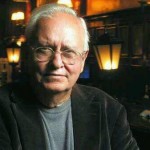
Can good poetry also be a good politics? I am paraphrasing a question that I have heard Jeff Goldfarb asking on several occasions. Günter Grass, German novelist, poet, sculptor, and a Nobel Prize laureate, delivered both — the finest literature and daring political insights. With his departure, Germany and the world have lost one of the last novelists who practiced the art of modern novel that Milan Kundera understood as being intrinsic to the existence of modern individual. Grass’ss novels capture depths and intricacies of human experience that he reiterated in epic yet unheroic stories free of pathos and sentimentality. …
The Discarded and the Dignified – Part 3
From the Failed Witness to “You are the Eyes of the World”
Failed witnessing: The Drowned and the Saved
The pivotal function of the moral third in relation to collective trauma is constituted by the acknowledgment of violation by the others who serve as witness. At a social level this role is played by the eyes and voice of the world that watches and upholds what is lawful by expressing, at the least, condemnation and indignation over injustice and injury, trauma and agony endured by the victims. The suffering or death of the victims is thus dignified, their lives given value. Their lives are worthy of being mourned, as Butler (2004) termed it, they are grievable lives. In other words, they are not simply objects to be discarded. Given the state of media proliferation, victims the world over know whether their suffering is seen and regarded; they can ask in despair, Why is no one paying attention as we die here? …
In Support of PODEMOS
One of the most appalling and discouraging outcomes of the recent European elections has been the rise and affirmation of a number of far-right, xenophobic, and populist electoral parties in East and Northern Europe and in France. This has been largely the outcome of years of austerity policies and crisis, which have deteriorated the conditions of life for millions of people across the continent. In this discouraging scenario, the most promising novelty has been, in addition to the Syriza’s electoral victory in Greece, the birth and astonishing affirmation (7.9%) of a new organization: Podemos (Spain). Podemos was created only a few months ago, in March, by leftist activists associated with the 15-M movement, and inherited the spirit and organizational methods of the Indignados movement. It opposes austerity policies and defends the welfare state and social rights from the neo-liberal attack supported by both center-left and center-right coalitions across Europe. …
Ernesto Laclau, 1936-2014
It is with great sadness that we learn of the death of Ernesto Laclau, the outstanding Argentinean political philosopher, at the age of 78. Ernesto had a heart attack in Seville where he was giving a lecture. He was the author of landmark studies of Marxist theory and of populism as a political category and social movement. In highly original essays and books he demonstrated the far reaching implications of the thought of Antonio Gramsci, probed the assumptions of Marxism and illuminated the modern history of Latin America, rejecting simplistic schemas linked to notions of dependency and populism.
After studying in Buenos Aires Ernesto came to Britain in the early 1970s, where he lectured at the University of Essex and later founded the Centre for Theoretical Studies. The Centre ran a very successful postgraduate programme, attracting students from around the world. In the 1970s Ernesto made his mark with his critique of the so-called “dependency school” of Latin American political economists such as Fernando Henrique Cardoso. …
Three Reflections on Media Responsibility: Discussing Issues of Monstration
How do you show people’s words?
One of the most interesting problems posed by centralized media and journalism is the problem of authorship. Any news item bears traces of the organizational processes it went through. These processes involve various interventions, by different actors. In a sense they are no less collective than those processes that add up to scientific discoveries. In both cases the notion of “authorship” is misleadingly individualistic.
Take the extreme case of op-eds. Op-eds come with an identifiable author’s signature. They are supposedly characterized by the existence of a simple, indictable origin. Does it mean they were not co-produced by the publishing organization? Does it mean they were not edited by the organization either politely through an exchange of letters and suggestions, or forcibly, through cuts, re-phrasings, and imposed titles? This may be done in the name of clarity. Yet many op-ed authors are extremely lucid writers and need no help in achieving clarity. …
Film and Myth
Analyzing Gravity and All is Lost with some Captain Phillips
Two films frequently cited together on the best films lists for 2013 were Gravity and All is Lost. As many reviewers noted, the films featured isolated individuals up against the cold, impersonal forces of the universe — the dark void of outer space for Sandra Bullock in Gravity and the dark depths of the Indian Ocean for Robert Redford in All is Lost. Less noted was a crucial difference between the two films: Sandra Bullock survives and Robert Redford dies. Intrinsically connected to these outcomes is another difference: Gravity is the story of a woman; All is Lost is the story of a man. Through examining this difference we can learn how contemporary film achieves its effects through mobilizing unconscious mythic and archetypal images, especially those concerning gender.
In both films the main character is faced with the ultimate existential crisis: imminent death. In both films the characters are resourceful and draw on considerable inner resources in their struggle to survive. In both films the essence of the struggle lies in the characters’ efforts to connect with other human beings. …