EssaysLiberal Democracy in QuestionTheory & Practice

Hannah and Me: Understanding Politics in Dark Times

Contrary to the suggestion of my informal title, I did not study with Hannah Arendt, nor were we ever colleagues, although I missed both experiences only by a bit. I was a graduate student in the early 1970s in one of the universities where she last taught, the University of Chicago, and my first and only long term position, at the New School for Social Research, was her primary American academic home.

READ MORE →
EssaysIn DepthPsyche

Clinical Psychology, Psychological Science, and Neo-liberal Times

Clinical psychology first emerged as a formal subdiscipline within psychology in the aftermath of World War II. During the war, psychologists were initially hired by the military to play a role assessing recruits for psychological stability, combat readiness, and potential for officer training. They were also charged with the task of evaluating whether soldiers exhibiting symptoms of psychological trauma were experiencing bonafide psychological problems or malingering. Over time as the massive prevalence of psychological trauma became apparent, the demand for professionals capable of providing psychological treatment far exceeded the supply of available psychiatrists, and psychologists increasingly came to play a role as treatment providers as well. …

READ MORE →
CapitalismEssaysSex & Gender

Towards a Maternal Capitalism?

It has become commonplace to speak about the “fatherless society.” This is not because fathers no longer exist (there are indeed still a lot of people around who claim to be so), but because they exhibit behaviours that were usually associated with the other side of the parental coin: in today’s advanced capitalist societies, fathers change diapers, feed their newborns, and they even have to invent ever new forms of entertainment to catch up with the exuberance of the infantile imagination. In sum, fathers try to provide the physical and emotional care that was once typically associated with women and nannies. Is it possible to look at this transformation in the context of a broader change within capitalism itself? …

READ MORE →
EssaysIn DepthSex & GenderTheory & Practice

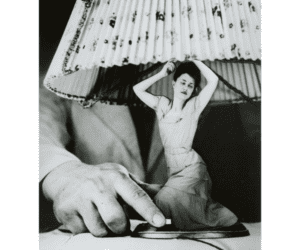
Neoliberalism and the Feminine Subject*

Foucault’s radical intervention in feminist theory, and more generally in the philosophy of the body, has been the crucial claim that any analysis of embodiment must recognise: how power relations are constitutive of the embodied subjects involved in them. His studies of disciplinary technologies, for example, show how individuals are constructed through mundane, everyday habits and techniques as certain kinds of subjects. Similarly, feminist appropriations of Foucault’s thought have demonstrated how feminine subjects are constructed through patriarchal, disciplinary practices. In the first section of this paper, I will illustrate this process by discussing Sandra Bartky’s influential account of how the docile feminine body is constructed through disciplinary practices of beauty. …

READ MORE →
Arts & DesignMulti MediaVideo

Spatial Ordering of Exile: The Architecture of Palestinian Refugee Camps

Alessandro Petti and Sandi Hilal are a team of two extraordinary architects who live permanently at Beit Sahour on the outskirts of Bethelem in Palestine. They have worked since 2007 to revitalize, reconstruct, take apart, and reconceive both the ruins and abandoned spaces that are the remnants of the vast spaces throughout Palestine that have been destroyed, dispossessed, cut into pieces over some sixty years since the Nakba in l947. Their work is extraordinary because it is unique in every way: from those they call on to work with them (artists, film makers, architects, young people from the refugee camps) to the visions they conceive and the materials and histories on which they draw. …

READ MORE →
CapitalismEssaysPsyche

The Unbearable Lightness of Being

The search for authenticity in consumer culture

Milan Kundera begins his novel Immortality with a description of a gesture made by a woman he is observing at a swimming pool. This woman, who we will come to know as Agnes in the story, smiles and waves at the lifeguard who has just been giving her swimming instructions. There is something charming and elegant for Kundera about this hand wave that reminds him of the gesture of a young woman “playfully tossing a bright colored ball to her lover.” This unique gesture reveals to Kundera the essence of Agnes’ charm, and he is dazzled and strangely moved by it. Later in the novel we discover that this gesture is not as unique as it initially seems. …

READ MORE →
CapitalismEssaysTheory & Practice

The Capitalism of Affects

In her groundbreaking book about emotional labor, The Managed Heart, Arlie Russell Hochshild suggests that emotions are not simply stored in us waiting to be expressed: they are also produced and managed. The notion and practice of affects management, both privately and socially, are not specific to capitalism. Hellenistic philosophers made up a new word to convey this very idea: metriopatheia, from pathos, affect, and metrios, a word that conveys both the notion of measure and that of moderation. As Foucault correctly noted, the management or negotiation of pathē in Greek and Roman philosophers, and in particular in the Stoics, is constitutive part of a process of subject formation, utilizing what Foucault calls techniques of the self, through which a specific and historically determined subject constitutes himself as capable of self-determination and self-mastery through a process that was social and individual at the same time. …

READ MORE →