The End of Europe
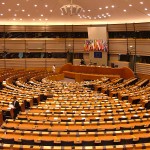
The process of European unification is undergoing a deep crisis, certainly the deepest since it started at the beginning of the 1950s. In less than a year, the EU faced two major tests—first the Greek quarrel, then the refugee crisis — that revealed its true face: a mixture of impotence, unwillingness, egoism, arrogance and cynicism. It is not a pretty spectacle. …
Pragmatism’s Promise
One of the many definitions of “dialectic” is “a method of examining and discussing opposing ideas in order to discover the truth”; another is “discussion and reasoning by dialogue as a method of intellectual investigation.” On either definition, Richard J. Bernstein is indisputably the most proficient and prolific dialectician working in philosophy today. His style has centered on the close reading of important figures who at first glance have little to do with …
Diagnosing American Politics
What the rise of Trump says about American democracy
I have a morbid fascination with Carl Schmitt. Morbid, because he manages to condense, in his political theory and philosophy of law, pretty much everything I find repulsive about the radical right. His pessimism about “human nature” is raw and simplistic and, unlike Hobbes, whom he superficially resembles, he is uninterested in clamping down on sin-infected humanity by way of a social contract that invests all sovereignty in an …
Germany’s Awkward Farewell to Günter Grass
Can good poetry also be a good politics? I am paraphrasing a question that I have heard Jeff Goldfarb asking on several occasions. Günter Grass, German novelist, poet, sculptor, and a Nobel Prize laureate, delivered both — the finest literature and daring political insights. With his departure, Germany and the world have lost one of the last novelists who practiced the art of modern novel that Milan Kundera understood as being intrinsic to the existence of modern individual. Grass’ss novels capture depths and intricacies of human experience that he reiterated in epic yet unheroic stories free of pathos and sentimentality. …
Democracy’s Crisis
We are currently experiencing a major crisis of democracy. What is at stake here is the specifically political dimension of a broader, multifaceted crisis, which also has other important dimensions — for example, economic, financial, ecological, and social. Taken together, all of these aspects, including the political dimension of democratic crisis, add up to a “general crisis.” It is at bottom a crisis of capitalism — or rather, of our current, historically specific form of capitalism: financialized, globalizing, neoliberal capitalism. …
A Continuing Conversation: From the Archiv to Social Research
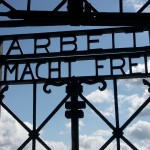
The Graduate Faculty of the New School for Social Research was founded in 1933 by Alvin Johnson, the president of the New School, who created there the “University in Exile” to provide a safe haven for scholars who were endangered by totalitarian regimes.[1] The University in Exile became necessary after the new National Socialist government in Germany immediately promulgated a “law” on April 7, 1933, the Gesetz zur Wiederherstellung des Berufsbeamtentums (Restoration of Civil Service Act), which was used as an instrument to dismiss civil servants either for racial or political reasons. …
Have Europeans Learned from the 20th Century for the 21st?
This is a lightly abridged version of the keynote address to the conference of the Europe for Citizens Forum in Brussels on January 28th, 2014. Goldfarb was asked to address the question of the title. Siobhan Kattago, Irit Dekel, and Anna Lisa Tota also contributed to the Forum. The latter two are forthcoming.
Open up the newspaper, even in the U.S., and almost every day there is evidence that many Europeans have not learned from the horrors of the 20th century. Although there are powerful forces working against this, the politics of racial and religious hatred is still very much with Europe.
There are alarming manifestations of both anti-Semitism and Islamophobia on a regular basis in Europe, east and west, north and south. The latest include the antics of the anti-Semitic “humor” of Dieudonne M’bala M’bala and his popularization of the “quenelle,” and the attempts of the French authorities to control this latest fad. Thus, as I composed this lecture, I read in my morning New York Times that a French appeals court ruled to uphold bans on Dieudonne’s performances. …