A Continuing Conversation: From the Archiv to Social Research
The Graduate Faculty of the New School for Social Research was founded in 1933 by Alvin Johnson, the president of the New School, who created there the “University in Exile” to provide a safe haven for scholars who were endangered by totalitarian regimes.[1] The University in Exile became necessary after the new National Socialist government in Germany immediately promulgated a “law” on April 7, 1933, the Gesetz zur Wiederherstellung des Berufsbeamtentums (Restoration of Civil Service Act), which was used as an instrument to dismiss civil servants either for racial or political reasons. …
The Creative Class Rises Again
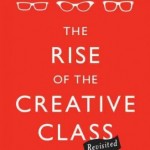
When first published in 2002, The Rise of the Creative Class quickly established its author Richard Florida as an urban policy and business management guru. The Rise of the Creative Class heralded the emergence of a new class of worker who promised to lead the economy, and along with it the rest of society, to unprecedented levels of prosperity. The creative class, according to Florida, included scientists, engineers, artists, designers, media producers, and others whose primary function is “to create new ideas, new technology and/or creative content.” They are abetted in this endeavor by a whole host of high-level information workers—doctors, lawyers, accountants, educators, and the like—who draw upon complex bodies of knowledge to solve difficult problems that require high degrees of autonomy. To mark a decade of influence, the book was re-released in 2012 in a substantially updated version, The Rise of the Creative Class, Revisited, now out in paperback. …
The Social Condition
I am embarking upon a new project, the investigation of the social condition, identifying dilemmas that are inevitably built into the social fabric, and exploring the ways people work to address them. Some examples:
It is obviously important for a democratic society to provide equal opportunity for all young people. The less privileged should have the advantages of a good education. This is certainly a most fundamental requirement for equal opportunity. On the other hand, it is just as certain that a good society, democratic and otherwise, should encourage and enable parents to provide the best, to present the world as they know and appreciate it, to their children: to read to them, to introduce them to the fine arts and sciences, and to take them on interesting trips, both near and far. But not all parents can do this as effectively, some have the means, some don’t. Democratic education and caring for one’s children are in tension. The social bonds of citizenship and the social bonds of family are necessarily in tension. This tension, in many variations, defines a significant dimension of the social condition…