FeatureLiberal Democracy in Question

Donald Tusk’s Polish Stalker

Jacek Saryusz-Wolski Challenging Tusk for President of European Council

READ MORE →
EssaysFeature

Borders and the Politics of Mourning

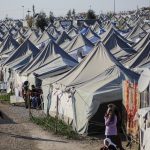
In early 2014, the artist Anton Christian placed a shattered wooden boat in front of the impressive baroque Cathedral of St. Jakob in the heart of the Austrian city of Innsbruck. Christian had found the boat on the shores of the Adriatic Sea and brought it to Innsbruck to evoke images of Lampedusa, the Italian island that has become the symbol of the refugee crisis. After the boat was partially destroyed by vandals, the artist decided to keep the damaged object in front of the cathedral, supplemented by a marker that explained the attack. …

READ MORE →
EssaysFeatureLiberal Democracy in Question

The Illiberal International

Stalin, in the first decade of Soviet power, backed the idea of “socialism in one country,” meaning that, until conditions ripened, socialism was for the USSR alone. When Hungarian Prime Minister Viktor Orbán declared, in July 2014, his intention to build an “illiberal democracy,” it was widely assumed that he was creating “illiberalism in one country.” Now, Orbán and Jarosław Kaczyński, the leader of Poland’s ruling Law and Justice (PiS) party, and puppet-master of the country’s government (though he holds no office) have proclaimed a counter-revolution aimed at turning the European Union into an illiberal project. …

READ MORE →
EssaysFeatureLiberal Democracy in Question

Are EU Exit Referenda Good for Democracy?

Referenda are important instruments of democratic politics. They have been used since the late eighteenth century in various circumstances of political life, most often in relation to constitutional change or issues of self-determination. In contemporary democratic societies, there is pressure to submit contested political questions to popular vote, in order to reduce tensions between popular will and governance. Even democratic governments which are not constitutionally obliged to do so now feel compelled to consult the people directly. 

Brexit, the UK’s referendum on whether to stay in the EU, reflects this tendency. It is not the first referendum on EU matters. And yet, there is novelty here: the people were deciding directly whether to leave an organization of democratic states, …

READ MORE →
EssaysFeatureIn DepthLiberal Democracy in Question

20th Century European Lessons for a 21st Century Brexit

It seems that June 23rd 2016 has become a new “zero hour” moment in European history, though I doubt it will go down in history as one next to November 9th 1989 or May 8th 1945. Those were system changing dates that eventually rippled around the world and signaled the coming of new eras in international relations history: from the multipolar world, to the bipolar cold war, and to the unipolar moment/era of U.S. supremacy. No, Brexit’s date will most likely join the other not so remembered — but still greatly important — days of European pitfall, which triggered constitutional and foreign relations turning points. 

Three dates/events come to mind: first February 21st 1947, when Great Britain relinquished its Mediterranean and European balance of power role by no longer guaranteeing Greece’s and Turkey’s security. …

READ MORE →