Arts & DesignEssays

Bigger Canvas, Longer Necks

An artistic intervention enacting a revolutionary desire

From the Public Seminar mission statement: “Confronting fundamental problems of the human condition and pressing problems of the day, using the broad resources of social research, we seek to provoke critical and informed discussion by any means necessary.” This includes provocative art. –Jeff

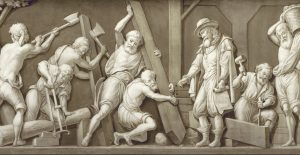
Either we make history or we stupidly stand in front of it like strangers in front of an alien. GRÖSSERE LEINWÄNDE LÄNGERE HÄLSE, BIGGER CANVAS LONGER NECKS, TOILES PLUS GRANDES, COUS PLUS LONGS will take their parts in the estrangement of mankind. But Realism that reverse the conditions, that decomposes and replaces the social automatics by situations, that will not orientate on them, there is the revolutionary desire, that the order of the world should no longer be violence and control. …

READ MORE →
Arts & DesignCapitalismEssays

Rebooting RoboCop

Comparing 2014 with 1987

As someone who grew up with Paul Verhoeven’s original 1987 RoboCop, I can’t help but feel the dystopic and critical social commentary of the movie was lost in its reboot. What was once a critical and distopic film exploring the dangers of unchecked corporate power has become a soft endorsement of corporate warfare. Yet, some elements of the remake do provide useful insights into our changing social politics that are worth considering. The evolution of RoboCop reveals how both capitalism and imperialism have changed and deepened their hold on our cultural imaginary in less than pleasant ways.

There are basically four key sets of players in the original story: Omni Consumer Products or OmniCorp (OCP), the mega corporation which builds RoboCop, runs the Detroit police force and plans to construct a corporate utopia called “Delta City” in the ruins of old Detroit; Alex Murphy, the Detroit cop who becomes RoboCop; the police department run by OCP; and crime boss Clarence Boddicker, who is in cahoots with OCP executive Dick Jones,  The connections among these players were central to the original story. …

READ MORE →
Arts & DesignEssays

Film and Myth

Analyzing Gravity and All is Lost with some Captain Phillips

Two films frequently cited together on the best films lists for 2013 were Gravity and All is Lost. As many reviewers noted, the films featured isolated individuals up against the cold, impersonal forces of the universe — the dark void of outer space for Sandra Bullock in Gravity and the dark depths of the Indian Ocean for Robert Redford in All is Lost. Less noted was a crucial difference between the two films: Sandra Bullock survives and Robert Redford dies. Intrinsically connected to these outcomes is another difference: Gravity is the story of a woman; All is Lost is the story of a man. Through examining this difference we can learn how contemporary film achieves its effects through mobilizing unconscious mythic and archetypal images, especially those concerning gender.

In both films the main character is faced with the ultimate existential crisis: imminent death. In both films the characters are resourceful and draw on considerable inner resources in their struggle to survive. In both films the essence of the struggle lies in the characters’ efforts to connect with other human beings. …

READ MORE →