On the Other Side of the Berlin Wall
East Germany and the fall
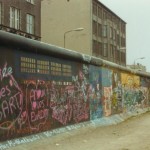
It was a colleague, Jonathan Bach, who discovered that Trebor Scholz and I, both currently associate professors at the New School, happened to be serving in the German military 25 years ago — but on opposite sides of the wall! As such, he brought us together for the Enter Ghost Symposium, giving us an opportunity to reflect on our experiences in …
Winter is Coming for Refugees in Germany
On the humanity vs. the organization of refuge
It’s getting cold in Germany. It’s actually hard to believe that it has only been weeks since warm images of the “good” German went around the world, of thousands of people welcoming even more thousands of refugees with food, toys, and clothes at train stations throughout the country. It was only a few months ago that Angela Merkel transformed from the dictator of …
Why Iran is Afraid of Daniel Barenboim
Dischords instead of overtures
No Art of the Fugue in the land of a thousand centrifuges: Iran has informed Daniel Barenboim that his intended concert with the Berlin orchestra in Tehran has been cancelled. There will be no overture during the long-anticipated easing following the nuclear deal. This is a blow for Barenboim as well as for Steinmeier, the German foreign minister, who was meant to be the patron of the concert.
The official explanation is interesting …
The Discontinuous Borders of the European Union
Migrants, refugees, and the labor market
The powerful image of thousands of migrants marching together on the motorway between Budapest and Vienna, in the first week of September, is one of those images capable of symbolizing a turning point. It made visible the utter failure of the European policies on immigration and political asylum, while symbolizing the ongoing open contestation of the borders of Fortress Europe. As a part of this …
Germany’s Awkward Farewell to Günter Grass
Can good poetry also be a good politics? I am paraphrasing a question that I have heard Jeff Goldfarb asking on several occasions. Günter Grass, German novelist, poet, sculptor, and a Nobel Prize laureate, delivered both — the finest literature and daring political insights. With his departure, Germany and the world have lost one of the last novelists who practiced the art of modern novel that Milan Kundera understood as being intrinsic to the existence of modern individual. Grass’ss novels capture depths and intricacies of human experience that he reiterated in epic yet unheroic stories free of pathos and sentimentality. …
The German Geist Dwells Nowhere
The turmoil surrounding Heidegger’s Black Notebooks achieved new heights recently, with Freiburg University’s announcement that its legendary Heidegger Lehrstuhl would be abolished and converted to a junior professorship in logic (!) and analytic philosophy, as if to deliberately obliterate Heidegger’s legacy. Apparently, the Lehrstuhl has become too controversial. This decision may well be scandalous, as Markus Gabriel argued on March 3rd in Süddeutsche Zeitung, but the reasons he marshals in defense of a Heidegger Lehrstuhl in his essay — “Where Does German Spirit Dwell?” — seem to us to create needless confusion. A collegial response is in order.
Hope and its Discontents in Greece
The impressive victory of Syriza in the January 25th Greek elections was the direct result of increasing popular discontent with the Greek political elites and years of self-defeating austerity. The party, which symbolized a break with the past, ran on a platform based on hope, in contrast to the campaign of fear waged by the center-right government of New Democracy. “Hope is under way” was the main slogan, reverberating the famous Chilean “La alegria ya viene” from the referendum on Pinochet in the mid-1980s. Syriza played well on that terrain, promising to the people radical change, including the drastic restructuring of the debt through a 1953-style international conference, and the rejection of the memorandum of agreement with the “troika” of bailout monitors.
Memories of Identities, Identities of Memory
How do memorials shape who we think we are? And how do we “do” identities when we interact with memorials? As Salon.com and others noted, gay men have been using the signature concrete slabs of the Berlin Memorial to the Murdered Jews of Europe as backdrops to their profile pictures on grindr, a geo-social app that lets those have have logged on find each other that is popular with gay men. In Salon’s account, the combination of the memorial and the anticipation of erotic pleasure is “odd” and “peculiar.” The Memorial appears as a “prop” for self-presentation. The trend is portrayed as equivalent to the EasyJet airline’s 2009 fashion shoot for an in-flight magazine at the memorial. …
Review: Atatürk in the Nazi Imagination
Of all the 20th century strong men of Europe, Mustafa Kemal Atatürk [MKA] is the only remaining one whose authority and charisma is still a culturally, politically and even legally, unquestionable component of the public discourse in his country. Yet his influence on Hitler and 20th century fascism has gone unexamined. That will change with Stefan Ihrig’s chilling book, Atatürk in the Nazi Imagination. His research into more than two decades of mainstream, right-wing and Nazi publications in Germany following World War I demonstrates how the founder of Modern Turkey was actually a muse and a role model for the Nazis and Hitler. …