EducationEssays

Between Ideals and Realities

An overview of the General Seminar on the legacies of the University in Exile

Last Wednesday, on February 26th, there was a special meeting of The New School for Social Research’s General Seminar, commemorating the 80th anniversary of the University in Exile. Three faculty members and three graduate students were asked to address a foundational question: “What is the meaning of The University in Exile for New School for Social Research of the future?” The answers they presented and the discussion that followed, it seems to me, present a unique opportunity to reflect upon not only the history and future of our specific institution of higher education and research. It also sets the stage for thinking about how universities, and specifically The New School with its special traditions, should address broad and pressing political, economic and social challenges of our times. As the University in Exile was an elegant response to the dark clouds over Europe in the 1933, thinking about its meaning for the future challenges us to respond in kind. …

READ MORE →
EssaysLiberal Democracy in Question

Sleepwalking into the Future?

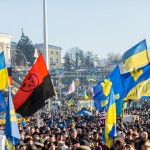
Memory and civic participation in Europe: East, West, North and South

This is the prepared text of a contribution to a conference of the Europe for Citizens Forum in Brussels on January 28th, 2014. Irit Dekel, Anna Lisa Tota and Jeffrey C. Goldfarb, also contributed to the Forum. Their texts are forthcoming.

It is an honour to reflect on European remembrance at today’s forum. As one who teaches political philosophy at Tallinn University in Estonia, the tradition of European philosophy is my bread and butter. Where would philosophy or politics be without Europe? Our very language of politics stems from the Athenian polis. Likewise, civil law is rooted in Roman Justinian code. From Machiavelli’s grammar of the modern state to Kant’s dream of perpetual peace, the tradition of European political philosophy is extraordinarily rich.

Before discussing some fissures in 20th century European memory, we might reflect on the symbolism of today’s “Europe for Citizens Forum.” If the 27th of January commemorates International Holocaust Remembrance Day, today, the 28th of January marks the 1,200th anniversary of the death of Charlemagne in 814. …

READ MORE →
EssaysLiberal Democracy in Question

A Post on Laughter and Remembering in Berlin

Diversity, tension, relief, and the Stolpersteine

“…and this woman in the chic coat: is she going to clean also?”

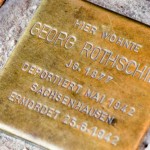
Responding to advertisements calling for people to “actively remember,” on November 9 and 10, 2013, in Berlin and other German cities, the commemorative Stolpersteine (or “the stumbling blocks”) were physically cleaned. The Stolpersteine are little brass plaques placed at the entrances of houses whose inhabitants, most often Jews, were deported and murdered in the Nazi period. This form of commemoration was initiated in 1993.

The cleaning of the plaques was itself commemorative, marking the events of the once-named “Reichskristallnacht” of 1938. Though taking place on November 10 and 11, and often in broad daylight, the infamous attacks on Jews in Germany and Austria are officially remembered in Germany on November 9 and commonly thought to have been only nocturnal. The attacks have since been renamed, in both state and popular language, as the “Reichspogromnacht,” or the November Pogrom, foregrounding the anti-Semitism at their core…

READ MORE →
EssaysIn DepthLiberal Democracy in Question

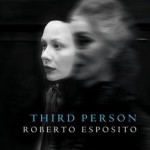
Human Rights Without Persons? A Review Essay of Third Person

We are used to thinking that human rights are rights that belong to every person because of their intrinsic value. But is this the only, or at least, the best way of thinking about human rights? In his recent book, Third Person, Roberto Esposito has radically challenged this view. According to him, the triumph of the category of “the person” that, since the end of World War II has accompanied the discourse on human rights, is not the source of its success, but rather of its failure. This is because, in his view, the notion of the person, which has, since the days of Roman law and even more pointedly in its Christian elaboration, indicated the transcendent value of a human being, is incapable of bridging the gap between humanity and the logic of citizenship, precisely because it is what creates such a gap.

By opposing the person, as something artificial and endowed with moral and political significance, to mere humanity in its naturalness, Roman law gave rise to a powerful “dispositif” (p. 9), that is, to a notion that has, throughout its various Western morphologies, always been able to produce very real and tangible effects.

READ MORE →
EssaysLiberal Democracy in Question

Torture and Dignity

This lecture to the New School’s General Seminar was originally published on the above date. Given the recent revelations concerning the CIA’s program of torture, we are highlighting Bernstein’s reflections today, Dec. 12, 2014. -J.G.

I. The Abolition of Torture

Human beings are the sorts of being who can undergo devastation: they can be destroyed in their standing as a person, as being possessed of morally inviolable intrinsic worth; they can have their dignity and self-respect destroyed. When one loses her dignity she also loses her trust in the world. Dignity is the representation of self-respect, where self-respect is the stance of one who takes herself to be of intrinsic worth and acts accordingly. …

READ MORE →
EssaysLiberal Democracy in Question

Thought-Defying Evil

In the summer of 1945 Melvin Lasky, who was stationed in Germany with the American occupation forces, visited Karl Jaspers. Lasky, a correspondent for the Partisan review, mentioned the name of Hannah Arendt. Jaspers had lost contact with Arendt since 1938 and was stunned to discover that she was still alive. He asked Lasky if he could write to her through the American military post. This was the beginning of a renewed a correspondence that had begun in 1926 when Hannah was Jaspers’ student. Their friendship deepened over the years with many personal visits. Their correspondence, which lasted until 1969, reads like an epistolary novel where the full humanity and the intellectual vigor of each is intimately revealed. The correspondence ultimately included exchanges with their spouses, Gertude Jaspers and Hienrich Blücher. One of the most charming letters is dated November 18, 1945 where Hannah, who started sending food packages to the Jaspers, instructed Gertude about how to fry American bacon. “Put the slices in a moderately hot pan and fry over a low flame. Keep pouring the fat until the slices are crisp. Then nothing can go wrong with either the fat or the bacon” (Arendt and Jasper 1992: 24). But from the beginning Jaspers and Arendt exchanged their views on much more weighty topics.

READ MORE →
Essays

European Memory vs. European History: A Critical View From Estonia

This post was first published a few weeks ago. It is being featured today because of the very interesting comment by Maija Andersone-Spurina from Latvia and to encourage further discussion.  – J.G.

Since the fall of the Berlin Wall in 1989 and break-up of the Soviet Union in 1991, Europe has gone through unprecedented changes. Two decades later, there are still conflicting ideas about what Europe means and who belongs or should belong. Moreover, there still is a long shadow cast by the Holocaust, with distinct differences in how to live under the shadow. While there seems to be a tacit understanding in Western Europe of the importance of the Holocaust in twentieth century Europe, there is a rising focus on national suffering in many east European countries that marginalizes the European genocide. Memory and history are in tension, weakening understanding of national pasts and challenging the connection between the east and the west of Europe, weakening European unity.

READ MORE →