Can I be a Pragmatic Pacifist?
This is a gently updated version of a post I originally published in Deliberately Considered. I post it now, thinking about the latest chapter of the never ending story of the war on terrorism.
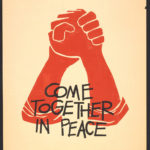
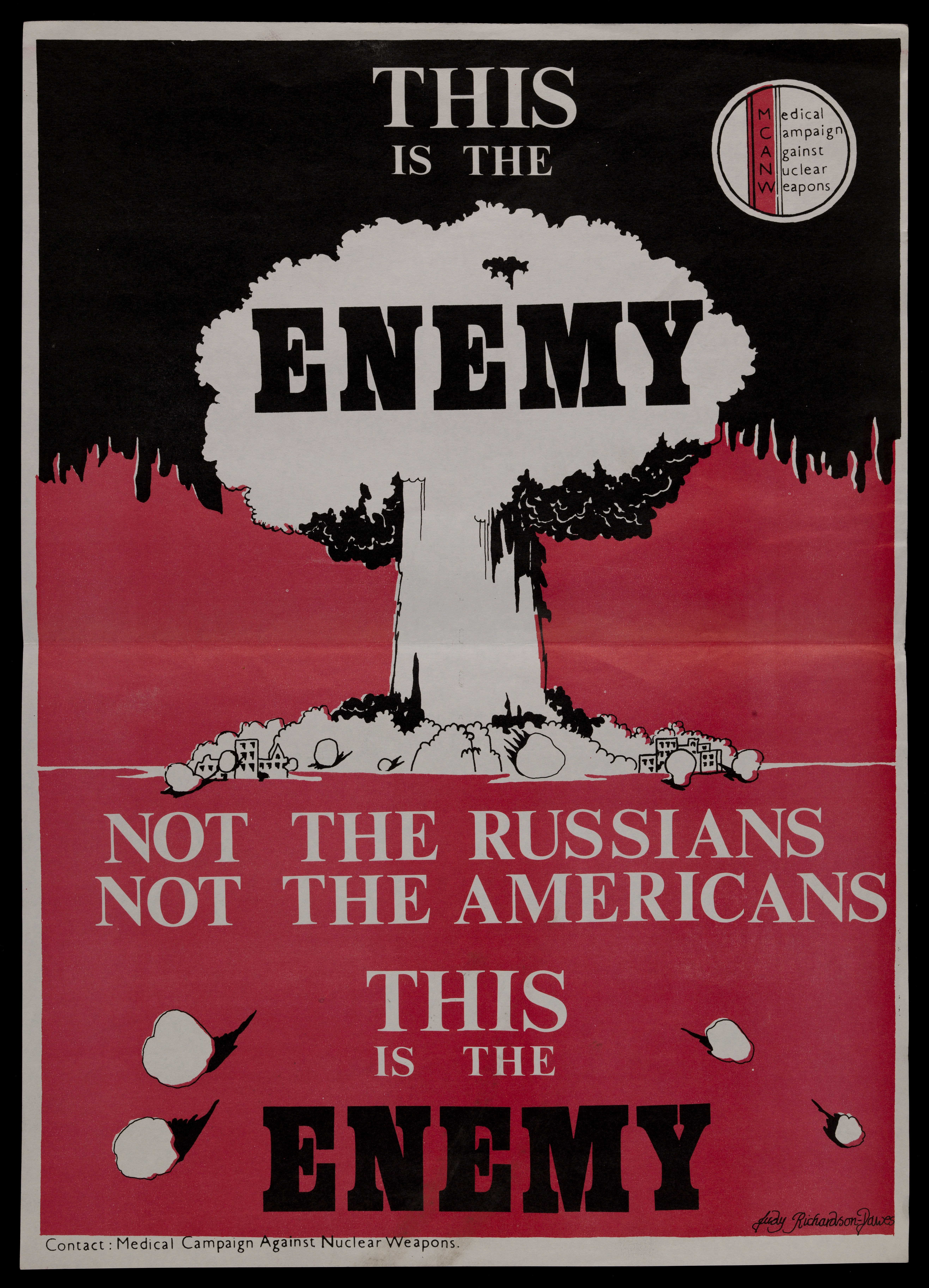
I remember struggling with this question as a young man. Subjected to the draft during the Vietnam War being a very early and precocious opponent to the war, I tried to convince myself that I was a pacifist. Wanting to avoid conscription, I read the writings of Gandhi and A.J. Muste. I looked into the pacifist activities of the Fellowship of Reconciliation. Although I realized that making the claim of being a Jewish pacifist would be practically difficult, I wanted to explore possibilities. …
9/11: A Most Restless Event
The video below was produced between the Fall of 2001 and the Spring of 2002. It was first screened as a final project for the class Semiotics for Digital Producers, taught by professor Paul Ryan, as part of the graduate program in Media Studies of the New School for Public Engagement in New York City. Twelve years later, I revisited it editing and showing it for a second screening on the occasion of the memorial for Ryan in the Orozco room of the New School in April 2014.
I have returned to the video while reading the article “Theorizing the Restlessness of Events” by Professor Robin Wagner-Pacifici, thinking about issues of temporality, event, perception, performance and meaning. …
Proportionality and the Diaspora in Operation Protective Edge
A response to Piki Ish-Shalom
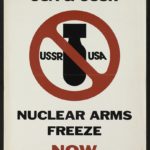
As far as military euphemisms go, Operation Protective Edge is not the worst offender. As any reliable voice will point out, Israel faces significant danger from Hamas and its various factions. The threat posed by missile attacks or deadly incursions courtesy of a significant tunneling network out of Gaza and into Israel are real and they are serious. It is unreasonable to expect Israel to do nothing about them indefinitely. Yet, self-defense does not mean that anything goes. Therein lies the problem. The population density of Gaza is high, and so the risk of harming civilians in any military attack is great. Any military strike, no matter how precise, will almost certainly hit civilians. Assuming, for a moment, that this war has been taken as a last resort, one of the remaining moral questions about this war becomes one of proportionality. …
Operation Protective Edge and Just War Theory
I teach Just War Theory (JWT). I defend it strongly as a necessary moral guideline for world politics in classes full of cynical students, Israeli-raised students, many of whom went through the grinding machine of the occupation (themselves grinding Palestinians in check points, night arrests, and the like); students who speak fluently the language of power. But at times I myself see the dark, the political abysses in which JWT becomes almost nothing but a scholastic exercise, like debating how many angels (or for that matter, demons) can dance on the head of a pin.
Think of the recurrent explosions of violence in Gaza/Israel, which in its current phase is called by Israel “Operation Protective Edge.” The recurrence of the violence has a fundamental importance that should not be overlooked in applying JWT to Operation Protective Edge. …
On the Heilbroner Center’s Manifesto
Explanation and Critique
In our opinion, the document drafted by Julia Ott and Will Milberg for the new Robert L. Heilbroner Center for Capitalism Studies should be the beginning of a debate among NSSR faculty about the Center’s mission rather than a final manifesto. There are many claims in the document with which we wholeheartedly agree: the pressing necessity to return to discussing and analyzing large structures, long processes, and big questions; the idea that capitalism must be a central object of study and concern; the interpretation of capitalism as a social process; the identification of various power relations as critical determinants of economic outcomes; and the acknowledgment that economic theories operate as political ideologies. Further, we agree with Ott and Milberg that capitalism “should not be assumed.” However, we think that it should not be only “explained,” as the present document suggests, but also, by the same token, criticized. Critique, indeed, is a constitutive part of the explanation of social phenomena and processes, and explaining capitalism without criticizing it does amount to assuming it. …