Top 10 List of Best American Historical Writing
Recently the net has seen various ten best lists of works in American history. I’d like to propose one of my own, but first I want to explain my rationale. American historical writing was transformed in the 1960s by two things: the realization that slavery and racism were the foundations of American history and the enormous achievements of such Marxist historians and social thinkers as Eric Hobsbawm, EP Thompson and Immanuel Wallerstein. Works produced during and after the sixties have given us a dramatically new picture of the country and my list reflects this. In addition, I choose works that look at American capitalism as a whole, not works that narrowly confine themselves to particular “fields,” like political history, economic history and so forth. Finally, I have chosen works that help us to see the United States in a global perspective even if the works are not themselves comparative or transnational. Here is my list: …
“All My Life I Have Been a Woman” and Other Excerpts
About language, our society, madness…
Leslie Kaplan read the following excerpts from her plays after she gave the eighth William Phillips lecture on November 6, 2013 at Theresa Lang Student and Community Center/Arnhold Hall of The New School.
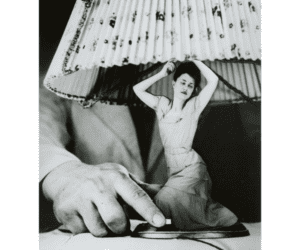
all my life I’ve been a woman
a woman
all my life
does that sentence seem
odd to me
Writing Moves the Sky
“To write is to jump outside the line of the assassins.” - Franz Kafka
First of all I would like to thank the New School, and Edith Kurzweil who invited me to this eighth William Phillips lecture and gave me the opportunity to come to the prestigious New School.
My father Harold Kaplan was a great friend of William Phillips, who published his first short story, The Mohammedans, in Partisan Review, in 1943, and later his Paris Letters, and many other pieces, and I always heard about Partisan review and William Phillips at home.
I was born in Brooklyn, in 1943, but brought up in Paris. Before the war, my father was studying French literature at the University of Chicago where he had a scholarship. He started working for the radio in 1942, in The Voice of America (La voix de l’Amérique), with André Breton and Pierre Lazareff, and afterwards was sent to Algiers, where he was when I was born…