CapitalismEssaysSex & GenderTheory & Practice

OOPS versus MOOCs

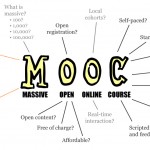
I first thought of writing this post over a year ago as a follow up to my piece “Against the Educational Uncertainty Principle.” I was struck by the way that recent interventions to address the various dimensions of higher educational crisis have made matters worse. MOOCs, Massive Open Online Courses, are a particular case in point. As I wrote then:

“I worry about magical solutions: MOOCs, substituting television for face to face inquiry, even though using the web to strengthen educational practices makes sense to me. …

READ MORE →
EssaysRaceTheory & Practice

The Social Condition and the Ghetto

Jeffrey Goldfarb and Iddo Tavory (recently joined additionally by Tim Rosenkranz) have been trading pieces in this forum toward sketching the outlines of an existential sociology based on a concept they call “the social condition.” The social condition, if I understand them correctly, is the intrinsic potential for our lives and our projects to come up against impasses. Borne from the complexity of our existences as social beings, it is the impossibility of overarching, unproblematic narratives. It is the inevitably of indeterminacy and irreconcilability. …

READ MORE →
CapitalismEssaysTheory & Practice

Consumption and the Social Condition

“In a series of posts, Jeff Goldfarb and I [Iddo Tavory] have been sketching an outline for the study of the social condition — the predictable dilemmas that haunt social life. We argue that one of the core intellectual missions of sociology is to account for the ways in which social patterns set up these dilemmas that actors experience as crucial for their lives and how they define themselves.”

I have been following this inquiry into the social condition for a while, and I suggest that it will help to further understanding this condition if we take seriously the daily dramas of consumption, both as comedy and tragedy. “Say Yes to the Dress” is one of these social dramas, based on the very premise that buying a wedding dress really matters, that people do not make their consumption decisions lightly. …

READ MORE →
EssaysLiberal Democracy in QuestionReligionTheory & Practice

The Social Condition: Religion and Politics in Israel

Once I commit myself to a new theoretical project, I start realizing how my reading can illuminate it. Sometimes this involves a concerted effort. Thus these days I am re-reading Georg Simmel with an intuition that he can be a key theoretical guide in understanding the social condition. But sometimes this is just a matter of reading something of general interest and realizing that it contributes to my project.  Thus I thought of my exploration with Iddo Tavory of the unresolvable dilemmas built into the social fabric when I was reading Nachman Ben Yehuda’s  book, Theocratic Democracy: The Social Construction of Religious and Secular Extremism.

Ben Yehuda, my old friend and colleague, is studying in his book Jewish extremism in the Jewish state. He investigates deviance in the religious community as a way to analyze the conflict between the religious and secular in Israel. …

READ MORE →
EssaysTheory & Practice

Humor and the Social Condition

In a series of posts, Jeff Goldfarb and I have been sketching an outline for the study of the social condition — the predictable dilemmas that haunt social life. We argue that one of the core intellectual missions of sociology is to account for the ways in which social patterns set up these dilemmas that actors experience as crucial for their lives and how they define themselves.

Social life, as anyone who is in the business of living knows, is riddled with ambiguities and contradictions. But these contradictions and dilemmas are not only the stuff tragedies and epics are made of. As importantly, they include materials from which comedy is crafted. If we attend to the structure of humor, we can see that jokes work precisely because they shine light on dilemmas that are built into the social fabric. Thus, one of the core insights of the study of the comic is that it depends on telling two stories at the same time (what Arthur Koestler called “bi-sociation”). …

READ MORE →