Towards a Maternal Capitalism?
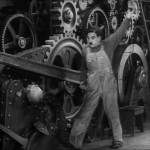
It has become commonplace to speak about the “fatherless society.” This is not because fathers no longer exist (there are indeed still a lot of people around who claim to be so), but because they exhibit behaviours that were usually associated with the other side of the parental coin: in today’s advanced capitalist societies, fathers change diapers, feed their newborns, and they even have to invent ever new forms of entertainment to catch up with the exuberance of the infantile imagination. In sum, fathers try to provide the physical and emotional care that was once typically associated with women and nannies. Is it possible to look at this transformation in the context of a broader change within capitalism itself? …
Alan Baas | Philosophy Talk Series | @NSSR
A reading of On the Cult of Fetish Gods
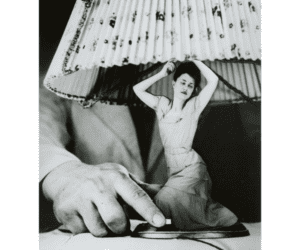
Since Marx’ and Freud’s influential usage of the term, we became accustomed to talk about fetishism as a topic for psychology and social theory. It is rarely remembered that the topic was originally a topic in theology and ethnology. Why has fetishism assumed such a wide meaning? Why do theorists of fetishism, from Marx to Freud and passing by Comte, always begin with applying it to a specific topic but then ending up generalizing it? These are some of the questions that Alan Bass tackles in his talk delivered as part of the Philosophy Thursday Nights Series. This talk is part of Alan Bass’s ongoing project, which aims at examining the implications of Freud’s generalization of fetishism at the end of his life in relation to the history of discourse on the subject. …
Climate Change and the New Synthesis
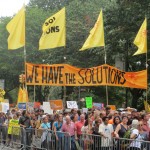
Is green the new red?
I completed my undergraduate studies at a small liberal arts college literally in the middle of a field somewhere between the bustling urban center of Cleveland and the depressed industrial ruins of my hometown, Youngstown. My alma mater was surrounded by acres of farmland, bodies of water, Amish communities, and the occasional rural-suburban housing development. Nothing much caught my eye during my commute except for the treacherous dips and twists along the sparsely populated main road I followed, which constantly threatened to re-route my aging Honda Civic into a tractor-dug ditch or a clutch of untouched trees.
Until one day, just crossing out of the corona of campus into the deep space of rural Ohio, I noticed a sign in a yard. “Green is the New Red,” it proclaimed, illustrated by a picture of a pleasantly green pine tree juxtaposed with an ominously red hammer and sickle. …