CapitalismEssaysLiberal Democracy in Question

The Greek Referendum: A New Battle of Marathon

The historical resonance, significance and challenges of 'no' on July 5th

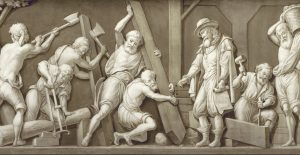
Some commentators have compared the victory of the “Oxi” at the Greek referendum of July 5th to a Pyrrhic victory, implying that while the anti-austerity camp won this battle, it is doomed to lose the war, strangled by the insurmountable economic difficulties caused by the lack of liquidity. Others have suggested that the referendum looked like the Thermopylae battle of 480 BCE, where three hundred Spartans valiantly fought the Persian army and lost. A better comparison, however, in my judgment is that with the Battle of Marathon. …

READ MORE →
EssaysLiberal Democracy in Question

Fortress Europe and a Mediterranean Cemetery for Migrants

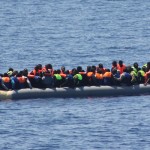
In the night between April 18th and April 19th a boat filled with up to 950 migrants sank in the Mediterranean Sea, 70 miles north of Libya, while trying to reach the southern European border. This was not only the greatest tragedy to date involving migrants in the Mediterranean Sea, it is also the last of a long series of deaths: around 14,600 from 1993 to November, 2012; 900 in little more than a year from January, 2014 to April, 2015, before this latest tragedy.

In face of between 700 and 900 deaths, it is difficult to write a series of numbers and data, when anger, sadness, and shame would seem to be a more appropriate response. …

READ MORE →
EssaysLiberal Democracy in Question

Vilnius and Warsaw: Our Common Cause

Upon receipt of the Freedom Prize

Mrs. President, Mrs. Chair of the Parliament, Mr. Prime Minister,

I am moved and embarrassed by this honor bestowed by the Parliament of the Republic of Lithuania on a Pole — a Polish journalist and editor of Gazeta Wyborcza. I treat it as a sign of recognition for my friends and colleagues who supported Lithuanian strivings for independence and democracy from the very beginning — and this includes people from the era of democratic opposition and those who later came together around “Gazeta.” The Polish democratic opposition always wanted a sovereign and democratic Lithuania to be a friendly neighbor of a sovereign and democratic Poland. …

READ MORE →
CapitalismEducationEssays

The Plight of Greek Higher Education

Greek higher education has been, for the past four years, under a double attack, both by crippling austerity-induced budget cuts and by an attempt to accelerate the imposition of aggressively neoliberal reforms towards an entrepreneurial model of higher education.

To understand the importance of these processes, we must take into consideration the role of higher education in Greece as a contested terrain of social struggles. For a long time one of the basic forms of upward social mobility, access to a public higher education was considered at the same time a basic social right and something worth fighting for, both individually and collectively. …

READ MORE →
EssaysLiberal Democracy in Question

Solidarity with Ukraine against Putin’s Reality

We should not be surprised by differences about how to respond to the Russian invasion of Ukraine. Understanding reasons for those differences is one critical step toward formulating an effective response. Recognizing both real policy options and the equal importance of political signals is the second. Moving too fast is dangerous in the short run, but not moving at all is the most dangerous in the long run. And that’s what Germany’s leadership promises.

We should not be surprised that the authorities of Germany, the Netherlands, France, Italy and Spain explicitly resist calls for trade sanctions. Leaderships in Austria and Hungary are likely with them. London seems more concerned with its financial prospects than European well-being. Putin has been pursuing a policy of diplomatic divide and conquer within the EU, sweetened with economic deals powered by the energy business. …

READ MORE →
EssaysLiberal Democracy in Question

Sleepwalking into the Future?

Memory and civic participation in Europe: East, West, North and South

This is the prepared text of a contribution to a conference of the Europe for Citizens Forum in Brussels on January 28th, 2014. Irit Dekel, Anna Lisa Tota and Jeffrey C. Goldfarb, also contributed to the Forum. Their texts are forthcoming.

It is an honour to reflect on European remembrance at today’s forum. As one who teaches political philosophy at Tallinn University in Estonia, the tradition of European philosophy is my bread and butter. Where would philosophy or politics be without Europe? Our very language of politics stems from the Athenian polis. Likewise, civil law is rooted in Roman Justinian code. From Machiavelli’s grammar of the modern state to Kant’s dream of perpetual peace, the tradition of European political philosophy is extraordinarily rich.

Before discussing some fissures in 20th century European memory, we might reflect on the symbolism of today’s “Europe for Citizens Forum.” If the 27th of January commemorates International Holocaust Remembrance Day, today, the 28th of January marks the 1,200th anniversary of the death of Charlemagne in 814. …

READ MORE →
EssaysLiberal Democracy in Question

Lenin’s Lost his Head: What’s Going On in Kyiv?

On Sunday, for the second time in two weeks, a half-million people gathered to protest against the government in Kyiv’s Maidan Nezalezhnosti (Independence Square) in an action dubbed on Twitter #ЕвроМайдан (EuroMaidan). Meanwhile, a short distance away, a smaller group of people toppled an eleven-foot statue of Vladimir Lenin, quickly removing its head and breaking the body up with a sledgehammer. The images of the latest Ukrainian protests are reminiscent of the Orange Revolution. The Maidan is again the site of a makeshift opposition camp complete with field-kitchen, portable toilets, hundreds of tents, a stage, and barricades all decorated with Ukrainian flags. Viktor Yanukovich and Russia have also reprised their roles as the main villains and targets of popular protest. While there is value in comparing the Orange Revolution and EuroMaidan, there are also important differences that make the solution to the present situation much more complicated and uncertain.

One common thread between the Orange Revolution and EuroMaidan is the contestation of Ukrainian identity…

READ MORE →
CapitalismEssays

The American Dream Comes to Life in Denmark

The following is the prepared text of the speech given by Minister Haekkerup on September 28, 2013, at The New School, with an introduction by William Milberg.

Introduction

The word “capitalism,” describing our market-oriented economic system of wage labor, private ownership and the endless drive for wealth accumulation, was invented in the 19th century. For the last part of the twentieth century, “capitalism” was a dirty word. It alluded ever so uncomfortably to exploitation in human interaction and the unequal nature of modern economic society. The word capitalism was represented by euphemisms in economics –- “competitive equilibrium,” “pure competition,” or “monetary production system.” My late colleague Robert Heilbroner found that Gregory Mankiw’s popular textbook, Principles of Economics, a book over 500 pages long and first published in 1998, mentions the word “capitalism” just one time, and that occurs in a footnote.

In 2013, we once again dare to speak the word. Why? Because with the international financial crisis of 2008 and the economic stagnation experienced in much of the industrialized world since then, there is a palpable sense that the system is at risk and in need of scrutiny, as a system. Capitalism, it would seem, is back.

READ MORE →