The Many Lives of Jacob Taubes

The philosopher Jacob Taubes (1923-1987) was an impossibly difficult man who strived to unite the impossible to unite. Taubes, a philosopher of religion and politics, spent his life straining to unite Saint Paul, Jacob Frank, and Sabbatai Sevi in an antinomian and chiliastic mix. His ultimate aims were the overcoming ...
Read More

The Many Lives of Jacob Taubes

Towards Constructive Politics

What oppression is, at the end of the day, is a world that has been built in a bad way

It just isn’t true that the only problem that confronts people who are trying to learn the truth about their social system is that they haven’t talked to enough people who have less money than them, or a more marginalized racial or gender identity. That’s among the problems, but the ...
Read More
Towards Constructive Politics

Of Fish and People

On the inevitable sinking of the “Russian World”

Belarusian and Ukrainian intellectuals have been applying postcolonial theory to Russia since the 1990s. But they have largely been ignored in the West. Now it is time to listen to those voices from the ‘borderlands.’...

Read More
Of Fish and People

Souvenir

Adapted excerpt from Activities of Daily Living

For her project about the Artist—at least that’s what she was calling it for now, a project—Alice read all that she could find about his yearlong performance works before he renounced making art altogether. There was the year he locked himself in a cage. The year he punched a time clock ...
Read More
Souvenir

Putin’s New Iron Curtain

Freedom and democracy are both impossible if we do not take responsibility for the other

Let us recognize that freedom and democracy are both impossible if we do not take responsibility for the other. This is the call of ethics. It is required to imagine another future, to free the world from arrogant barbarism, to break out of the world in which we now find ...
Read More
Putin’s New Iron Curtain

A New Perspective on Richard Rorty’s Philosophy

A series of lectures belatedly published in English sheds new light on the mind of a moralist

1 Richard Rorty, the American philosopher and public intellectual who died in 2007, is perhaps best known as “the philosopher who predicted Donald Trump.” In Achieving Our Country, a book articulating his reflections on the possibilities and prospects for democracy in the United States, Rorty worried that economic inequality, coupled with ...
Read More
A New Perspective on Richard Rorty’s Philosophy

Patriotism’s Dilemma

Lessons from The Godfather

The idea of patriotism – love of country – is an ancient one.  It goes back to the Greek word patris (place of one’s ancestors) and the Latin patria (fatherland).  Like every form of love, patriotism is partly determined by the object of its affection.  Is love of country unconditional – ...
Read More
Patriotism’s Dilemma

How Should We Commemorate Mary Wollstonecraft?

Why the current controversy is curiously appropriate

On Tuesday, November 10, the British sculptor Maggi Hambling’s new monument to Mary Wollstonecraft was unveiled on Newington Green, in North London – and almost immediately, there was an uproar. On social media and in newspapers, the monument was variously decried (“What the actual fuck is this?”) and mocked as “a ...
Read More
How Should We Commemorate Mary Wollstonecraft?

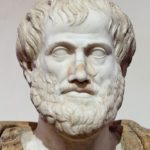
What Did Aristotle Think About Slavery?

Why we need to read great books closely

I admire Professor Collard’s attempt to defend Aristotle despite his views on slavery. My question is whether he actually held the views she attributes to him. We must avoid two common responses that seem to me misguided. The first is to reject Aristotle out of hand because his views do not ...
Read More
What Did Aristotle Think About Slavery?

Time Is Out of Joint

Simultaneity in the epoch of the near and far

For those who are either unemployed or overworked, those whose habits and routines have fallen apart, those experiencing psychological or bodily distress, the days may seem to drag on endlessly. For others -- perhaps those who find themselves on the pandemic’s frontlines or those who have discovered a sense of ...
Read More
Time Is Out of Joint

Field Notes on “Sentencing the Present”

Diagnosing what is false without ceding what is beautiful

This is a final reflection by the curators of the seminar series “Sentencing the Present,” which was republished in full last week as “An Archive of a Crisis.” Because readers have asked us about the process and production of “Sentencing the Present,” when Public Seminar asked us to write a “post-mortem” ...
Read More
Field Notes on “Sentencing the Present”