Arts & DesignEssays

The Museum of the History of Polish Jews

The return of the secular Jew to a happier Poland

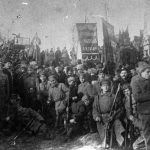
The grand opening of Polin or the Museum of the History of Polish Jews at the end of October was a widely anticipated event, and when its exhibition was finally revealed, the celebration was covered by major media in Europe, the U.S., and, unsurprisingly, Israel. Timothy Garton Ash and Anne Applebaum, among others, acknowledged Poland’s efforts to deal with its own history of Polish-Jewish relations. In the Financial Times Tony Barber emphasized how, today, Warsaw is a safer place for Jews than Berlin or Paris. All this praise comes a long way from the usual connotation: Poland as the place of Nazi death camps. …

READ MORE →
EssaysLiberal Democracy in Question

On Bitter Satisfaction

The European Court of Human Rights ruling on Polish-CIA collaboration

The verdict was more forceful than expected. On July 24, 2014 the European Court of Human Rights in Strasbourg handed down two unanimous rulings in the cases of Al Nashiri v. Poland and Husayn (Abu Zubydah) v. Poland. The cases concerned the extraordinary rendition by the CIA of two terrorism suspects to a secret detention site in Poland. Both men alleged that in December of 2002, during the early phase of the Bush administration’s “War on Terror,” they were secretly transferred to Poland, where they were tortured while being held, for nine and six months respectively, in an unacknowledged detention facility. …

READ MORE →
EssaysSex & Gender

Immigrant Mothers as Agents of Change

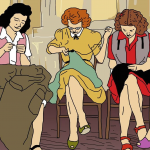
In a recent interview with the German daily Frankfurter Allgemeiner Zeitung, Elisabeth Badinter bemoans new trends in motherhood emerging in France. The French feminist observes that growing numbers of French mothers — though they are still a minority, she is quick to add — are becoming preoccupied with childrearing practices: they are overprotective, sacrifice too much for the (perhaps largely imagined) good of their offspring, lose themselves in motherhood. Immediately, I thought this sounded a lot like a description of Matka Polka, the archetypal Polish mother — that is until I read the next sentence, in which Badinter concludes that French mothers are becoming more like the German ones. …

READ MORE →
Arts & DesignMulti MediaVideo

A Conversation with Krzysztof Czyzewski

On the evening of April 9th, the Polish theater director, actor, and “practitioner of ideas,” Krzysztof Czyzewski, had a public conversation with Elzbieta Matynia and Jeffrey Goldfarb at the New School for Social Research. Czyzewski discussed his life course from actor in the avant-garde theater Gardzienice to a resident and activist in a remote northeastern corner of Poland, where Poland, Lithuania and Belarus meet, with Russia and Ukraine just down the road. He delves deeply in this “borderland” through living among and working with the people in the city of Sejny and the surrounding area. …

READ MORE →
EssaysLiberal Democracy in Question

Reflections on a Revolutionary Imaginary and Round Tables

The new always appears in the guise of a miracle

This is the prepared text answering the question “What do we really know about transitions to democracy?” for  the General Seminar of The New School for Social Research, March 19, 2014.

It was a quarter of a century ago, in 1989, that a new kind of revolutionary imaginary emerged, one that promises a new beginning, and demonstrates the possibility of comprehensive systemic change without bloodshed. Velvet or otherwise un-radical, this kind of revolution has become a site of tangible hope, a site in which words have power, where people regain their dignity, and realize their agency through instruments other than weapons. Negotiated revolutionis not an oxymoron, but it is still an extraordinary event, as dictatorships are by definition opposed to any spirit of dialogue and compromise. …

READ MORE →
EssaysLiberal Democracy in Question

Solidarity with Ukraine against Putin’s Reality

We should not be surprised by differences about how to respond to the Russian invasion of Ukraine. Understanding reasons for those differences is one critical step toward formulating an effective response. Recognizing both real policy options and the equal importance of political signals is the second. Moving too fast is dangerous in the short run, but not moving at all is the most dangerous in the long run. And that’s what Germany’s leadership promises.

We should not be surprised that the authorities of Germany, the Netherlands, France, Italy and Spain explicitly resist calls for trade sanctions. Leaderships in Austria and Hungary are likely with them. London seems more concerned with its financial prospects than European well-being. Putin has been pursuing a policy of diplomatic divide and conquer within the EU, sweetened with economic deals powered by the energy business. …

READ MORE →
EssaysLiberal Democracy in Question

Have Europeans Learned from the 20th Century for the 21st?

This is a lightly abridged version of the keynote address to the conference of the Europe for Citizens Forum in Brussels on January 28th, 2014. Goldfarb was asked to address the question of the title. Siobhan Kattago, Irit Dekel, and Anna Lisa Tota also contributed to the Forum. The latter two are forthcoming.

Open up the newspaper, even in the U.S., and almost every day there is evidence that many Europeans have not learned from the horrors of the 20th century. Although there are powerful forces working against this, the politics of racial and religious hatred is still very much with Europe.

There are alarming manifestations of both anti-Semitism and Islamophobia on a regular basis in Europe, east and west, north and south. The latest include the antics of the anti-Semitic “humor” of Dieudonne M’bala M’bala and his popularization of the “quenelle,” and the attempts of the French authorities to control this latest fad. Thus, as I composed this lecture, I read in my morning New York Times that a French appeals court ruled to uphold bans on Dieudonne’s performances. …

READ MORE →
Arts & DesignEssays

Tiny Instruments Hit a Profound Chord

Multicultual creativity in the city of Wrocław

Last summer I was fortunate to be among the faculty of the Democracy & Diversity Institute in Wrocław, Poland, organized by Transregional Center for Democratic Studies (TCDS). Friendships were forged, ideas were tested, and disciplinary lines constructively crossed, all of which I’d been prepared for and had been looking forward to experiencing as the sole faculty member from Parsons among colleagues from the New School for Social Research.

What I hadn’t expected was that I’d develop a deep affection for the music of toy pianos. Specifically the toy pianos played by Małe Instrumenty (Small Instruments), a band started in 2006 by Paweł Romańczuk with Marcin Ożóg, Tomasz Orszulak, Jędrzej Kuziela and Maciej Bączyk.

Yes, toy pianos. Including a plastic Barbie piano, which, Paweł explained, has a very good sound, in contrast to their sole Communist-era piano called Precision whose keys emitted static…

READ MORE →
Arts & DesignEssays

Jan Sawka: The Power of the Not So Powerless

The following lecture was prepared for delivery at the symposium “Jan Sawka: The Artist’s Role in Changing the World” presented by The Paul Robeson Galleries, Gallery Aferro and the Newark Arts Council, Saturday, November 16, 2013, in conjunction with the exhibition at the Gallery Aferro, “Reflections on Everyman: the work of Jan Sawka.”

I have crossed paths with Jan Sawka three times, although only one of these times did we meet.

It was at a low moment in Polish history, the early 80s. It was in his small apartment on 58th street in Manhattan, in very cramped living quarters, with Sawka, constantly working, drawing and painting, even while the family entertained guests. In the midst of the domestic, he created his own world, responding to life’s public and private absurdities, and tragedies, with his imagination and craft. The intensity of the moment, during the weeks after the declaration of martial law in Poland, the repression of the first nationwide popular social movement in the former Soviet bloc, a labor movement of workers moving against the workers’ state, …

READ MORE →