#MeToo East and West

A matter of history and conditioning

This post was originally published by Eurozine and was accompanied by three other posts that Public Seminar has reposted this week.   Following the first wave of the #MeToo movement, a new phase of reflection has set in. Here, four authors and journal editors from the US and Europe assess #MeToo's achievements ...
Read More

#MeToo East and West

Radical Objects – A Response

Migration and Museums

This post is a response to Bryan Sitch’s Radical Objects: A Refugee’s Life Jacket at Manchester Museum. Migration as a primary focus for museums only has a recent history, with particular development over the last decade or so. In that time, we’ve seen the development of migration museums focusing on emigration, immigration ...
Read More
Radical Objects – A Response

Nowhere is Somewhere

Solidarity and the space between nations

Since the Brexit referendum in June 2016 and the election of Donald Trump in November 2016, there has been a distinct shift away from a liberal international order based on supranational organizations supporting human rights, freedom and equality towards the primacy of the nation-state. Moreover, sentiments of fear and resentment ...
Read More
Nowhere is Somewhere

Poland’s Growing Authoritarianism

On Facing the Implications of Recent Events

In order to restore real justice, unlike the EU-enforced one, there are no holds barred; and just because something is written in law doesn’t mean it’s just. It doesn’t even matter that some of these laws were created during the previous 2005-2007 PiS-led government or that they were signed by ...
Read More
Placeholder

Neither Normalization Nor Alarmism

Responding to Ivan Krastev

Krastev is surely right that the current situation is distinctive (indeed all situations are distinctive), and simplistic analogies to 1930’s fascism or 1970’s communism are misleading. He is also right that “alarmism” is mistaken (after all, when is “alarmism,” as opposed to “sounding the alarm,” ever a good thing?), and that the defense of democracy ...
Read More
Placeholder

One Hundred Years of Communism

A look at Leninism

On November 7, 1917 (October 25, old style), the Bolsheviks overthrew the Provisional Government, took over power, and established their totalitarian rule (the first one-party system ever). Lenin called it "the dictatorship of the proletariat." Rule of law and traditional morality were discarded as "bourgeois hypocrisy." Political competition between parties ...
Read More
Placeholder

Memory, Fidelity, Appropriation

A Response to Jonathan Bach’s What Remains

And yet, the fact that all major parties refused to view the AfD as a legitimate contender -- let alone a potential coalition partner -- indicates that German public memory still somehow “works.” However, the attempts to make sense of the election through the prism of memory serve as a ...
Read More
Placeholder

Postcolonial Investigations and the Role of Necessary Discontinuity

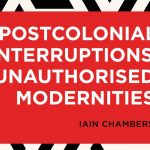
A Review of Iain Chambers’ Postcolonial Interruptions, Unauthorized Modernities

In Postcolonial Interruptions, Unauthorized Modernities, Iain Chambers is preoccupied with the critical foreclosure that impedes our perception of the ways contemporary migration, as well as “the racism that precedes and accompanies it,” is not abnormal or exceptional.[1] In face of the waves of violence that convulse the landscape of the ...
Read More
Postcolonial Investigations and the Role of Necessary Discontinuity

What Remains: Everyday Encounters with the Socialist Past in Germany

An excerpt from Jonathan Bach’s latest book

Introduction The GDR never existed.” Nonsense, of course -- the German Democratic Republic, aka East Germany, existed for forty cold war years as the front line of the Soviet Bloc, as West Germany’s socialist double and as a lived reality for sixteen million people. Yet, eighteen years after German unification in 1990, ...
Read More
Placeholder

How (Not) to React to the Far Right in Germany

On the attempt to respond to the rise of the AfD Party

Even though this result was in line with the last pre-election polls, this success has come as a shock to Germany’s other parties. Since the results were announced, the country’s political and journalistic classes have been engaged in a collective soul-searching to account for the AfD’s rise. A good amount ...
Read More
Placeholder

How We Got Here

Transition failures, their causes, and the populist interest in the constitution

The answers to these questions are related. In the following, in the form of six theses, I start with what I mean by “populism”. Next, I wish to point to the two deficits of liberal democracy that provide the context for the rise of populist politics. These deficits have been ...
Read More
Placeholder

Solidarity after Machiavelli

An interview with Ira Katznelson

So first, when you ask what Machiavelli would advise, he would probably take some time, though since he was a genius, he would probably figure it out: what kind of rule this is, what kind of rulers these are. But he would have been surprised in a different dimension. He ...
Read More
Placeholder