EssaysLiberal Democracy in Question

Reflections on a Revolutionary Imaginary and Round Tables

The new always appears in the guise of a miracle

This is the prepared text answering the question “What do we really know about transitions to democracy?” for  the General Seminar of The New School for Social Research, March 19, 2014.

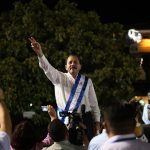
It was a quarter of a century ago, in 1989, that a new kind of revolutionary imaginary emerged, one that promises a new beginning, and demonstrates the possibility of comprehensive systemic change without bloodshed. Velvet or otherwise un-radical, this kind of revolution has become a site of tangible hope, a site in which words have power, where people regain their dignity, and realize their agency through instruments other than weapons. Negotiated revolutionis not an oxymoron, but it is still an extraordinary event, as dictatorships are by definition opposed to any spirit of dialogue and compromise. …

READ MORE →
EssaysLiberal Democracy in QuestionThe Left

The War on Fascism

By my title,“The War on Fascism,” I do not mean the war between the US, the Soviet Union and Great Britain, on the one hand, and Nazi Germany, Mussolini’s Italy and imperial Japan on the other, the war that took place between 1939 and 1945. Rather I mean an unspoken war on the concept of fascism that increasingly characterizes our understanding of World War Two and informs discussion of contemporary problems, such as Ukraine. Although the term “fascism” is still in use today, it generally refers to real or supposed dictatorships, such as those of Saddam Hussein or Vladimir Putin, and has lost its original connotation, that of an authoritarian but still capitalist state. Because the original meaning of “fascism” was aimed not at dictatorship, but at the relation between dictatorship and private property and market power, the term had a critical or self-reflective character. Understanding the loss of this character can help us understand the history by which present political discussions, for example those concerning Putin, have become impoverished. …

READ MORE →
CapitalismEssaysThe Left

John Dewey’s Encounter with Leon Trotsky

The 1930s was one of the one eventful and productive decades in Dewey’s life. He published more than a half dozen books including Logic: The Theory of Inquiry. It was during this decade that he sharpened his understanding of radical democracy and a renascent liberalism. He interrupted his scholarly work to travel to Mexico as the Chair of the Trotsky Commission — or to give its full title, “The Commission of Inquiry into the Charges Made against Leon Trotsky in the Moscow Trials.” …

READ MORE →
EssaysLiberal Democracy in Question

Solidarity with Ukraine against Putin’s Reality

We should not be surprised by differences about how to respond to the Russian invasion of Ukraine. Understanding reasons for those differences is one critical step toward formulating an effective response. Recognizing both real policy options and the equal importance of political signals is the second. Moving too fast is dangerous in the short run, but not moving at all is the most dangerous in the long run. And that’s what Germany’s leadership promises.

We should not be surprised that the authorities of Germany, the Netherlands, France, Italy and Spain explicitly resist calls for trade sanctions. Leaderships in Austria and Hungary are likely with them. London seems more concerned with its financial prospects than European well-being. Putin has been pursuing a policy of diplomatic divide and conquer within the EU, sweetened with economic deals powered by the energy business. …

READ MORE →
EssaysLiberal Democracy in Question

Sleepwalking into the Future?

Memory and civic participation in Europe: East, West, North and South

This is the prepared text of a contribution to a conference of the Europe for Citizens Forum in Brussels on January 28th, 2014. Irit Dekel, Anna Lisa Tota and Jeffrey C. Goldfarb, also contributed to the Forum. Their texts are forthcoming.

It is an honour to reflect on European remembrance at today’s forum. As one who teaches political philosophy at Tallinn University in Estonia, the tradition of European philosophy is my bread and butter. Where would philosophy or politics be without Europe? Our very language of politics stems from the Athenian polis. Likewise, civil law is rooted in Roman Justinian code. From Machiavelli’s grammar of the modern state to Kant’s dream of perpetual peace, the tradition of European political philosophy is extraordinarily rich.

Before discussing some fissures in 20th century European memory, we might reflect on the symbolism of today’s “Europe for Citizens Forum.” If the 27th of January commemorates International Holocaust Remembrance Day, today, the 28th of January marks the 1,200th anniversary of the death of Charlemagne in 814. …

READ MORE →
EssaysImaginal PoliticsLiberal Democracy in Question

Can Europe Learn from Latin America about History and Justice?

Can Latin America change European political memory? Can a long history of European silence be dealt with from across the Atlantic? The current investigations of Argentine courts into the crimes of the Franco dictatorship have brought these questions to the fore. As we have seen this week, many in Europe are not happy with this Third World « judicial intrusion » under the aegis of universal jurisdiction. …

READ MORE →