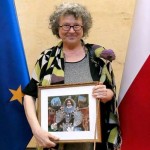
Snitow Receives the Courage in Public Scholarship Award
A report from Warsaw, June 9th, 2015
It was in late July of 2014, during the final two days of the 23rd annual Democracy & Diversity Institute, that a sizable group of the Institute’s alumni — representatives of a much larger NSSR/TCDS community now living and working in Europe — joined us in Wroclaw. They were an impressive and accomplished assemblage: people who teach at excellent universities …
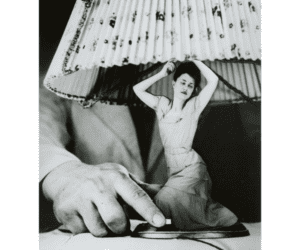
Tears and Laughter for Naomi Weisstein
A report from the memorial in New York City
Long a fixture of progressive culture in New York City, The New School opened its doors on September 20, 2015 to host a memorial celebration of the life, achievements, and activist causes of the remarkable Naomi Weisstein. Weisstein, who died last March at age 75, was a pathbreaking neuroscientist, woman in science, radical feminist, humorist, and co-founder of an all-women’s rock band (the Chicago Women’s Liberation Rock Band), before …
O.O.P.S. vs M.O.O.C.s: Midterm Report, Part 1
“The proponents of M.O.O.C.s (Massive Open Online Courses) look for the magic bullet, hoping to find a technological solution to the crisis in education. The O.O.P.S. (Open Online Public Seminar) project is to use the new technology, the potential of the web, to extend education’s promise.”
With these words, I closed my introduction to a New School for Social Research experiment, using the resources of Public Seminar to realize the intellectual mission of engaged social science in and beyond the classroom. Since then we have been pushing forward. …
Hannah and Me: Understanding Politics in Dark Times
Contrary to the suggestion of my informal title, I did not study with Hannah Arendt, nor were we ever colleagues, although I missed both experiences only by a bit. I was a graduate student in the early 1970s in one of the universities where she last taught, the University of Chicago, and my first and only long term position, at the New School for Social Research, was her primary American academic home.
Clinical Psychology, Psychological Science, and Neo-liberal Times
Clinical psychology first emerged as a formal subdiscipline within psychology in the aftermath of World War II. During the war, psychologists were initially hired by the military to play a role assessing recruits for psychological stability, combat readiness, and potential for officer training. They were also charged with the task of evaluating whether soldiers exhibiting symptoms of psychological trauma were experiencing bonafide psychological problems or malingering. Over time as the massive prevalence of psychological trauma became apparent, the demand for professionals capable of providing psychological treatment far exceeded the supply of available psychiatrists, and psychologists increasingly came to play a role as treatment providers as well. …
An Uncanny Era of Post-revolution (1989-2014)
Today’s post comes to us via the Transregional Center for Democratic Studies blog. -J.G.
On November 10, 2014, TCDS, partnering with the Polish Cultural Institute, hosted An Uncanny Era of Post-revolution (1989-2014) at The New School. Second in the series of events marking the 25th anniversary of the dismantling of Communist rule in Central and Eastern Europe, An Uncanny Era was the launch of two books and a three-way discussion between Elzbieta Matynia, Professor of Sociology and Liberal Studies at NSSR, who presented her new book An Uncanny Era: Conversations between Vaclav Havel and Adam Michnik; Irena Grudzinska-Gross of Princeton University, editor of a recent collection of Michnik’s essays on the era, The Trouble with History; and Adam Michnik…