Anarchism and Feminism: Toward a Happy Marriage?
Some have argued that the marriage between Marxism and feminism ended up in an unhappy marriage: by reducing the problem of women’s oppression to the single factor of economic exploitation, Marxism risks dominating feminism precisely in the same way in which men in a patriarchal society dominate women (Sargent 1981). The oppression of the latter needs to take into account a multiplicity of factors, each with its own autonomy, without attempting to reduce them to one all-explaining source — be it the extraction of surplus value in the workplace or unpaid shadow work in the household. There seems to be something intrinsically multifaceted in the oppression of women — so much so that women’s and gender studies programs are all, inevitably, interdisciplinary ones. …
Ernesto Laclau, 1936-2014
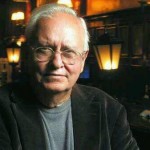
It is with great sadness that we learn of the death of Ernesto Laclau, the outstanding Argentinean political philosopher, at the age of 78. Ernesto had a heart attack in Seville where he was giving a lecture. He was the author of landmark studies of Marxist theory and of populism as a political category and social movement. In highly original essays and books he demonstrated the far reaching implications of the thought of Antonio Gramsci, probed the assumptions of Marxism and illuminated the modern history of Latin America, rejecting simplistic schemas linked to notions of dependency and populism.
After studying in Buenos Aires Ernesto came to Britain in the early 1970s, where he lectured at the University of Essex and later founded the Centre for Theoretical Studies. The Centre ran a very successful postgraduate programme, attracting students from around the world. In the 1970s Ernesto made his mark with his critique of the so-called “dependency school” of Latin American political economists such as Fernando Henrique Cardoso. …
Capitalism Studies: A Manifesto
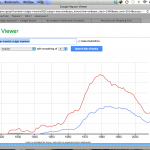
It seems odd now to recall that up until a few years ago, the concept of capitalism largely had fallen out of favor as a subject of academic inquiry and critique. Most scholars in the humanities and social sciences regarded the term as too broad, too vague, too encumbered by associations with either Marxism or laissez-faire. Following the collapse of the Soviet Union, capitalism could be taken for granted, it seemed. No person or nation could escape the discipline of efficient, spontaneous, self-regulating, globalizing markets.
Economists cut economies loose from society, institutions, culture, and history. They repositioned their discipline upon models that assumed that rational, utility-maximizing individual parts represented and explained the behavior of the economy-as-a-whole. Many social scientists — especially in political science — embraced these rational-actor models. Others joined historians and humanities scholars in the “cultural turn.” …