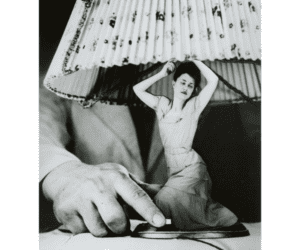
Shifting Geographies Rather Than Defections
The debate on feminists and the Left continues
We share Zaretsky’s desire to understand the trajectory of the Left past, present, and future. We disagree with him over the nature of the Left itself and with his account of the dynamics of political change. Where Zaretsky looks to the long duree and to political breaks as sources of current decline, we argue that the Left was always a more protean political formation in which lines of affiliation and disagreement were porous and changing. Finally, we insist, that if we are to understand the fate of the Left we must put it in dynamic relation with the actions of capital. Without expanding the political field, we mis-specify the geographies of political action — then and now. …
Look Out Kids: On the New and Next Left
A reply to Eli Zaretsky
Bundled into Eli Zaretsky’s unmistakable claim that second wave feminism was substantially to blame for the undoing of the 60s-era Left is another curious charge: that no American Left exists today, or has for a long time [“Rethinking the Split Between Feminists and the Left”]. In their response, Ann Snitow and Vicky Hattam expose the flimsy basis and maladroit construction of the first charge [“The Women Did It?”]. While adding to their case, I address mostly the second. I do so not as one who “was there” in the 1960s but as both a scholar of the period and an activist since the 1980s in what I’ve always considered the Left. Zaretsky’s rebuttal of the Snitow/Hattam response further confuses his original argument while modestly improving its terms. I deal with it briefly at the end.
Uniting both of Zaretsky’s claims is a dismissive view of the experiences and perspectives of others. Second wave feminists might feel proud of their efforts to establish battered women’s shelters, health and day care collectives, rape crisis centers, alternative schools, peace camps, and more accepting versions of the family. …
The Women Did It?
A reply to Eli Zaretsky
We are living through dark times. Many lament the decline of a vibrant Left in American politics; why the right has been ascendant for the past quarter century is a matter worth extensive exploration. Zaretsky’s “Rethinking the Split Between Feminists and the Left,” however, both underestimates the deep roots of the American right and overestimates the power of feminism (Perlstein, Lowndes). In doing so, Zaretsky makes it difficult to rethink the possibilities and obstacles for the Left now. Zaretsky’s account of feminist politics runs amuck because of the ways in which he links feminism with madness and distances it from radicalism and race. Let us untangle the ways in which Zaretsky puts these elements in play in ways that distort past, present, and future.
Let us begin at the beginning — with madness. Zaretsky starts with a fine recognition of Shulamith Firestone (1945-2012), and her work as a radical feminist thinker (The Dialectic of Sex) and activist. …
Autonomous Politics and Liberal Thought-Magic
In response to Nancy Fraser
Anarchism is often dismissed as incoherent, naïve, and ineffective. This is Nancy Fraser’s position in a recent article called “Against Anarchism.” Fraser’s criticisms are worth engaging not because they’re particularly perceptive or unique, but because they’re exceedingly common: these are some of the reasons that people dismiss anarchism all the time. What is it about anarchism that’s so threatening to people like Nancy Fraser? I think Fraser (and many others) are actually threatened by what I’ll call “autonomous politics,” which is both narrower and broader than anarchism, encompassing currents of Marxism, indigenism, queer politics, feminism, and anarchism. My suspicion is that Fraser hates autonomous politics not because it’s ineffective or undemocratic, but because it undermines her whole worldview and political project. Autonomous politics destabilizes liberalism, opening up more productive ways of thinking and relating. …
Who’s Afraid of Sigmund Freud?
The rise, fall, and possible resurrection of psychoanalysis in the United States
For decades psychoanalysis dominated professional approaches to mental health in the United States and had an influential impact on our culture. Starting in the late 1960s, however, psychoanalysis has become increasingly marginalized. Here, I will argue that psychoanalysis has always contained both subversive and conservative threads. As the historian Nathan Hale argued, Americans modified psychoanalysis to solve a conflict between the more radical implications of Freud’s views and the conformist pulls of American culture. This process of domestication enabled Americans to enthusiastically embrace psychoanalysis for a period of time. But they did so at the cost of transforming psychoanalysis in ways that ultimately contributed to its decline. Yet, ironically, the current marginalizaton of psychoanalysis may contain the seeds of a more radical psychoanalysis that serve as a healthy and constructive counter-cultural force moving forward…