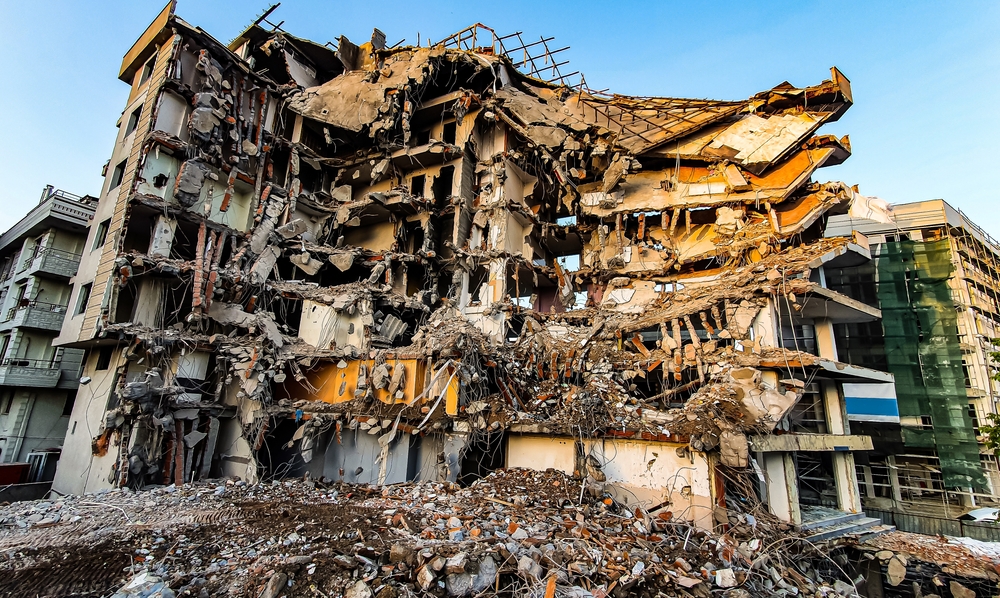
There’s Nothing Natural about Turkey’s Earthquake Disaster

Erdoğan’s AKP failed to plan for a catastrophe—but did create a strategy to use this catastrophe to stay in power

The current crisis in Turkey is not a natural disaster but a political one. We knew that a massive earthquake would hit southeastern Turkey. For many years, several geologists have not only specified where the fault line would most likely break but also which individual settlements the ensuing earthquake would ...
Read More
There’s Nothing Natural about Turkey’s Earthquake Disaster

What Austerity Has done to Care Work and Care Workers: An Interview with Emma Dowling

Unproductive Labor Podcast, Episode 14

Unproductive Labor · What Austerity Has done to Care Work and Care Workers: An Interview with Emma Dowling Emma Dowling is a sociologist and political scientist and teaches at the University of Vienna. She previously held academic positions in Germany and the UK. Her research interests include political economies of unpaid ...
Read More
What Austerity Has done to Care Work and Care Workers: An Interview with Emma Dowling

Gas Prices and the History of Energy Shocks

Past Present Podcast, Episode 317

Here are some links and references mentioned during this week’s show: Gas prices are surging, and Americans are frustrated. We all drew on historian Meg Jacobs’ book, Panic at the Pump: The Energy Crisis and the Transformation of American Politics in the 1970s. Natalia referred to this Atlantic article about the ...
Read More
Gas Prices and the History of Energy Shocks

How COVID-19 Became a Crisis

To understand what went wrong, look at how the problem is framed

We are in crisis. Nothing could be more self-evident: a global pandemic has ravaged the human species.   But wait—what does it mean to call an open-ended event that is playing out over a period of years a “crisis"? If humans live with viruses, how is Covid-19, and the diseases it triggers, a crisis for the human species and our ...
Read More
How COVID-19 Became a Crisis

Why The New School Will Survive

An imprudent venture in historical context

Ginia Bellafante is not the first reporter at The New York Times to call attention to the serious financial troubles of The New School. Since its founding in 1919, the university has repeatedly faced major budgetary shortfalls, the details of which the Times has faithfully and dramatically recorded. Each time, The ...
Read More
Why The New School Will Survive

A Political Paradox

Power, fallibility, and the Twenty-Fifth Amendment

The Twenty-Fifth Amendment was ratified on February 10, 1967, in the wake of the Kennedy assassination and a period of great anxiety about nuclear weapons. The first section deals with a vacancy in the presidency, the second section with a vacancy in the vice presidency. But it is Sections 3 ...
Read More
A Political Paradox

As New York City Rebuilds, Business Can Be Part of the Solution

Higher taxes are necessary, but who will have the political courage to make it happen?

Early in September, more than 160 executives from companies like Citigroup, Goldman Sachs, the white-shoe corporate law firm Skadden Arps, and a host of real estate developers and financial firms sent a letter to Mayor Bill de Blasio. They expressed their fear that “deteriorating conditions” in the city might slow ...
Read More
As New York City Rebuilds, Business Can Be Part of the Solution

How to Reopen the American Economy Now

We don’t have to choose between a depression and tens of thousands of avoidable deaths

And, of course, economists are on the case. In my favorite economic paper on the COVID-19 economy, Harvard University economist James Stock describes a new family of epidemiological-economic models that provide guidance about how best to reopen the economy. Here are his smart reopening requirements: promote collective behaviors to stop the spread of the ...
Read More
How to Reopen the American Economy Now

Where Is the Risk in the COVID Economy?

A look at shadow banking

We are witnessing a public bailout of the private sector that dwarfs the bailout response to the 2007­–2008 Great Recession. Compared to the $700 billion Troubled Asset Relief Program (TARP) implemented in 2008, today’s mobilization of public funds through the Coronavirus Aid, Relief, and Economic Security (CARES) Act amounts to ...
Read More
Where Is the Risk in the COVID Economy?

How Billionaires Get Away With Their Big Con

The rich have been successfully chipping away at Americans’ trust in government for decades

About 75 percent of Americans trusted the federal government to “do what is right” when polled during most of the last years of the Eisenhower administration and early years of Lyndon B. Johnson’s presidency. In 2019, when the Pew Research Center released its most recent poll of public trust in the government, only 17 percent ...
Read More
How Billionaires Get Away With Their Big Con